


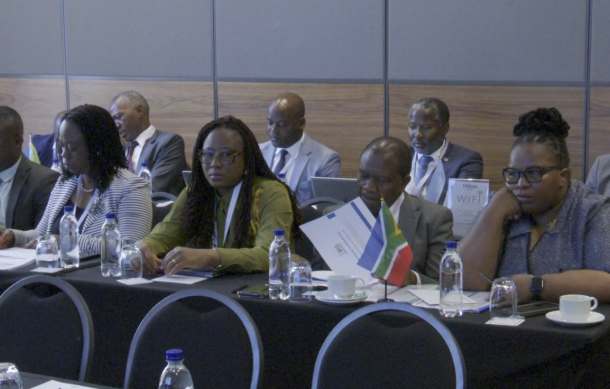
Namibia is leveraging the fourth Steering Committee Meeting of the Innovation Agencies in Africa Network to deepen collaboration.
Speaking at the event, National Commission on Research, Science and Technology CEO Anicia Peters emphasised that African nations must unite to tackle shared structural hurdles.
"While our innovation systems and national priorities may differ, many of the challenges we face as African countries are common, and we have one other important instrument in common, and that is the STISA 2034, and I believe that is the glue that binds us all together."
Professor Peters outlined key bottlenecks facing the continent, including limited access to finance, fragmented ecosystems, and weak linkages between research institutions and industry.
She noted that the NCRST is actively coordinating cross-border initiatives, mapping regional ecosystems, and establishing sustainable funding frameworks to bridge the gap from research to commercial application.
"This provides an opportunity to strengthen the relationship between science-granting institutions and innovation agencies and to build stronger pathways from research to innovation commercialisation and societal impact."
Echoing these sentiments, South African National Energy Development Institute CEO Dr. Titus Mathe highlighted green hydrogen, artificial intelligence, and critical minerals as priority areas.
Dr. Mathe stressed that joint efforts are crucial if the continent is to narrow the technological divide with global giants.
"We have social economic challenges across Africa which are very similar. The job situation is not where it should be. The economic development is far less than what it should be. And then also, from a technology point of view, for us to be competitive as a continent, we need to be investing in innovation so that we can leapfrog some of the countries that are involved in these innovations."
Held alongside the Science Granting Councils Initiative annual forum, the gathering aims to turn academic output into tangible economic value across Africa