


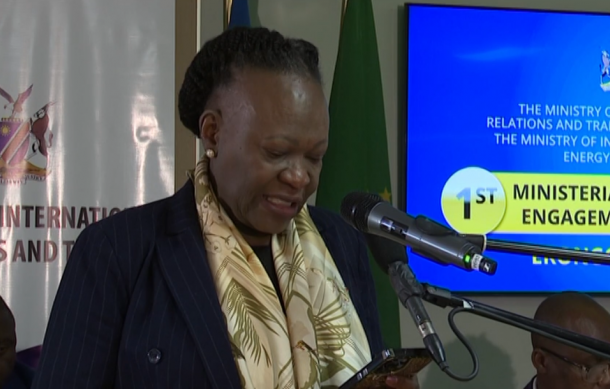
Namibia's push to diversify its economy took a major step forward this week as the Ministry of International Relations and Trade launched its first regional business consultation in Swakopmund, focusing on the Erongo Region's potential to expand beyond its traditional economic pillars of mining, tourism, and fisheries.
The session marked the official start of a national outreach programme aimed at equipping enterprises to tap into opportunities presented by the African Continental Free Trade Area (AfCFTA).
Erongo was selected to lead the national rollout, with similar engagements planned for all 14 regions.
Hosted in collaboration with the Ministry of Industries, Mines, and Energy, the event encouraged businesses in Erongo to explore untapped sectors and enhance their role in driving economic transformation.
Minister of International Relations and Trade Selma Ashipala-Musavyi emphasised the importance of local innovation, value addition, and export development as key strategies to reposition Namibia's regional economies for competitiveness under AfCFTA.
Ashipala-Musavyi reiterated the government's commitment to enabling an environment where the private sector can thrive, highlighting investments in critical infrastructure such as roads, ICT, energy, and logistics.
These were identified as key components for promoting trade and industrial growth across the country.
"Natural Resources Beneficiation—The more finished goods we export, the more jobs we create. What additional jobs can be created in the Erongo Region? What other sectors have we overlooked in this region, and how can the government come in, to the extent possible? Youth Empowerment for Sustainable Development—What makes Namibia and Africa attractive to the investor is their youthful workforce. Do the youth have the requisite skills? In what ways can we actualise the innovative ideas of our youth to contribute to employment creation and innovation?"
A main theme of the consultation was strengthening public-private partnerships, with a call for increased collaboration between government agencies and business chambers.
She stated that the role of small and medium enterprises, particularly those already engaged in trade or with export potential, is essential in achieving inclusive economic growth.
"This engagement should also serve as a platform for policymakers and like-minded business associates to exchange knowledge and ideas on how to ensure that the Namibian products have access and compete effectively in the regional, continental, and global markets, in particular to capitalise on the opportunities offered under the AfCFTA framework. We need to see more exports under the said agreements, including SME participation and women and youth in particular for diverse products."
The discussions also addressed barriers faced by export businesses, such as market access, understanding complex trade agreements, and overcoming non-tariff barriers.
She urged participants to share input on existing challenges and suggest policy ideas that could encourage more inclusive regional trade participation.