


The Kavango East Region is focusing on enhancing its agriculture sector to improve the livelihood of its residents.
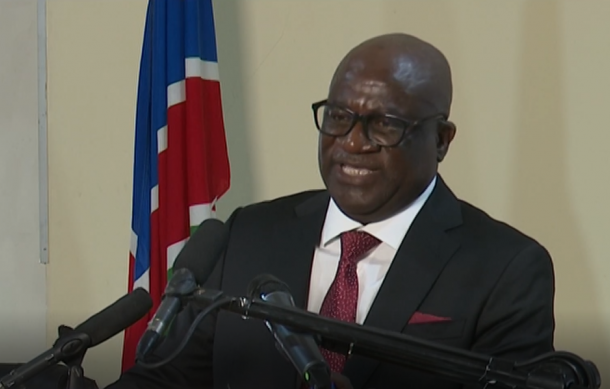
This was communicated during the maiden State of the Region address by Governor Hamunyera Hambyuka.
During the past year, Hambyuka says, the region made significant strides in critical sectors, including education, health, economic growth, infrastructure development, social protection, empowerment initiatives, and agriculture.
The governor emphasised that agriculture is one of the key resources the region is blessed with to help reduce poverty and unemployment and enhance food security.
"The region is striving for the full operationalisation of the green scheme projects to intensify food production and promote agro-processing initiatives at these projects, which may result in sustainable agriculture, employment creation, and improved food security. This is evident in the performance of the Uvhungu-Vhungu green scheme, in which 147 ha of maize was planted with an average yield of 8 tonnes, while a total of 97 hectares of wheat was planted with an average yield of 5.01 tonnes. It is also important to inform the residents that the Ndonga Linena green scheme project has planted 88 hectares of maize and 22 hectares of wheat, which yielded 440 tonnes. This has increased to a total of 350 hectares, with 110 hectares of maize and wheat planted, from which 2600 tonnes are expected to be harvested."
The governor added that the reinstatement of Mashare Agricultural Development Institute to serve as an agricultural college is at an advanced stage, and the first intake of students is expected to start by January 2026.
He further calls for intense career guidance and advice for youth to redirect their career path to agriculture to meet the government halfway.
"I am seeing the Namibian people who graduated, not only the graduates but also all the young people who have energy; we are very much afraid to apply for agricultural work. All of us find, like in the old days, that what we were having is that if you are not a teacher or a nurse, then your parents will look at you like you wasted their mom's time to go and study. It's still the same; we are thinking that whoever wants to send their child to study wants this child to become a teacher, and we know that there are a lot of graduate teachers on the street, but you are still sending your child to study to become a teacher to join the other group on the street. Why can't we think of ourselves now to change our approach to agriculture?"
The governor reaffirmed that regional leadership remains dedicated to integrating young people into national development by providing them with marketable skills, promoting entrepreneurship, and ensuring their well-being.