


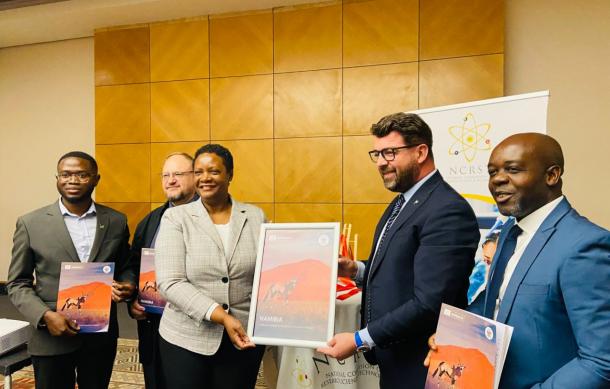
The Namibia Artificial Intelligence Readiness Assessment Methodology Report was launched today.
The assessment represents the country's first structured evaluation towards adapting, developing and governing AI, in line with inclusive and ethical development principles.
The project was carried out by the United Nations Educational, Scientific and Cultural Organisation (UNESCO) in collaboration with the National Commission on Research, Science and Technology (NCRST).
Namibia is in the process of establishing a national AI strategy.
Some key identified challenges in the report are the lack of AI procurement laws and regulatory frameworks in terms of legal dimension findings.
The Deputy Minister of Education, Innovation, Youth, Sports, Arts and Culture, Dino Balloti, expressed pride in the initiative, adding that AI has the potential to transform the economy, reshape education and have a positive impact in the health sector.
"Let us be clear, our readiness to harness AI will define the trajectory of our future. This report provides important guidance, which will help shape Namibia's path forward. AI is not just about machines and algorithms; it is about people. It is about ensuring that children in rural areas of the country can also benefit from the adaptive learning platforms, that farmers can access climate-smart data, that healthcare workers can be supported with diagnostic tools, and that our young people can create, innovate and thrive in this global economy."
Some recommendations that followed the assessment include the need to establish a regulatory framework, data protection laws and national AI institutions.
NUST is currently working on introducing a degree in AI Studies, which should capacitate Namibians to contribute to global AI development.
UNESCO's Country Representative, Eunice Smith, highlighted the role of artificial intelligence and transformative technologies in Namibia's National Development Plan Six, with respect to pillars on economic growth, transformation, resilience and social development.
"We, UNESCO, are extremely happy that Namibia has decided to undertake an assessment of its readiness for artificial intelligence. This assessment has resulted in important legal, socio-cultural, scientific, educational, economic, technical and infrastructural recommendations which would help Namibia build the ethical framework necessary to leverage and maximise the benefits of artificial intelligence for its development, while minimising the risks and challenges posed by the technology."
The assessment report is published and available online at UNESCO doc, which is a global library available online.