


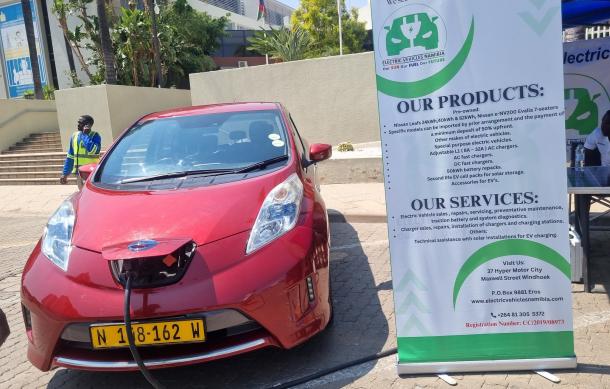
Tesla Energy Solutions Managing Director Elron Awase has encouraged the use of electric vehicles (EVs) to ensure the reduction of carbon emissions.
He was speaking during the City of Windhoek's Zero Emissions Week, which ended over the weekend.
The campaign aimed at highlighting the importance of adopting clean energy solutions.
Some of the key considerations of EVs include compliance with Namibia's right-hand drive requirement and the country's evolving charging infrastructure.
Electric vehicles offer advantages such as lower running costs, a lower carbon footprint, and a more responsive driving experience due to instant torque and less noise.
"We believe in achieving zero emissions and are committed to taking bold steps to develop infrastructure both in the city and across the entire country. We believe that if you're creative, you can drive from here to Cape Town or anywhere in the south. Many of these technologies have always been around in other countries. So why can Namibia not be one of the first? And this just shows that the City of Windhoek has taken that bold move to say that, yes, we believe in zero emissions, we believe in e-mobility, and we want to make that change."
Electric vehicles also benefit from lower maintenance costs compared to traditional cars, the convenience of home charging, and energy efficiency.
The absence of an engine leads to a quieter ride and a smoother acceleration experience without gear shifts, which reduces noise pollution.
However, the EV comes with challenges such as longer charging times, potential battery degradation over time, and a lack of widespread public charging infrastructure.
EVs often have a higher purchase price because of the battery cost, which can last up to ten years with proper care; however, over time, these batteries may lose capacity, reducing both driving range and performance.
Modern EVs typically offer a range of 241 to 480 kilometres, with some models exceeding 800 kilometres on a single charge.