


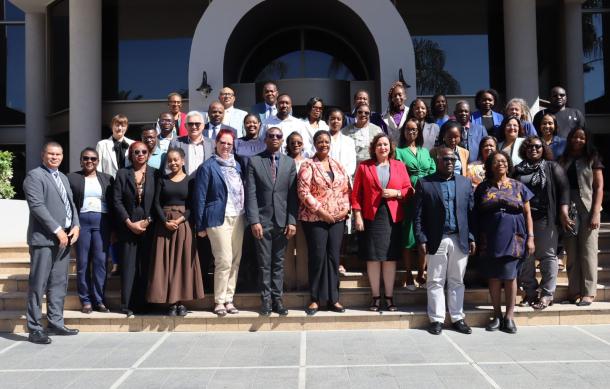
The Minister of Education, Innovation, Youth, Sports, Arts and Culture has expressed concern about the slow progress Namibia is making in listing heritage sites, such as the Brandberg, as World Heritage Sites.
Sanet Steenkamp also emphasised the importance of preserving Namibia's cultural heritage through digitising archives and highlighted Namibia's recent support for ex-political prisoners and their families during an event at Robben Island.
Speaking during the Namibia National Commission for UNESCO's Annual General Assembly, Minister Steenkamp highlighted the need to digitally capture and preserve stories, letters and songs from Namibia's history in archives.
She noted that Namibia currently has eight sites on the list, but she emphasised the need to accelerate efforts.
The minister questions what changes are necessary to improve the process.
She stated that consultation is essential to successfully advance the listing of cultural heritage sites.
"We are not making enough progress. What is it that we need to do differently with our corporate and development partners? Do we need more staff members? Do we need more expertise? she asked, adding that "Consultation is at the heart of every single listing if we wish to look into our cultural heritage sites. So do we need a different way of doing things to ensure that it doesn't take us years to get to the point where we want to be? That I leave our imprint on the hearts of everyone that is here. We are fully aware that our universities are strengthening international partnerships through UNESCO Chairs and bridging global research with local innovation."
Eunice Smith, the Head of Office and UNESCO's Representative to Namibia, pledged their support for Namibia. "With support from the UNESCO Memory of the World Programme, we are helping the National Archives to digitise and translate into English fragile documents and records, preserving Namibia's heritage and ensuring future generations can access and learn from these documents. For UNESCO's upcoming programmatic cycle, which starts in January and runs from 2026 to 2029, we intend to build on these interventions, working in close collaboration with you to support Namibia's national development priorities."
UNESCO is further supporting student-led research to aid the nomination of sites like Fish River Canyon and Etosha Pan as World Heritage Sites and facilitating transboundary cooperation, including consultations on the proposed extension of the Okavango Delta World Heritage Site.