


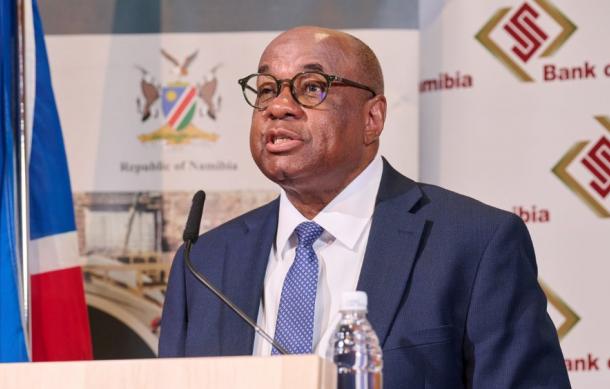
The Bank of Namibia has reduced its main interest rate by 25 basis points, to 6.5%, after previously keeping its lending rate unchanged for three consecutive monetary policy meetings.
The Central Bank's decision aims to support the weak domestic economy while maintaining the stability of the Namibia Dollar, which is pegged to the South African Rand.
The Bank of Namibia explained that the move to reduce the repo rate to 6.5% was to stimulate economic activity without destabilising capital flows or depleting international reserves.
This decision is expected to lower borrowing costs for commercial banks, which in turn would lead to reduced interest rates on loans for both businesses and consumers.
Commercial banks are expected to adjust their prime lending rates down to 10.125%.
Governor Johannes !Gawaxab emphasised that preparations for the upcoming Eurobond redemption have been made in advance, with the country's foreign reserves deemed sufficient to absorb the impact and maintain financial stability.
The domestic economy has weakened, with GDP growth slowing to 1.6% in 2025 from 3.3% in 2024, primarily due to declines in manufacturing, fishing and agriculture.
Inflation averaged 3.6% in the first eight months of 2025, lower than 4.6% in 2024, with recent monthly inflation steady at 3.5%.
Private sector credit extension showed a gradual recovery, reaching 5.8% in August 2025.
Foreign reserves declined from approximately N$58 billion to N$54.7 billion, covering about 3.6 months of imports and supporting the currency peg.
"The reduction in foreign reserves was mainly ascribed to elevated imports, foreign payments by the government and a stronger exchange rate. This level of foreign reserves translates to an estimated import cover of 3.6 months, remaining adequate to sustain the currency peg between the Namibia Dollar and the South African Rand and meet the country's international financial obligations," said BoN Governor Johannes !Gawaxab.
He added that "the global economy continues to exhibit resilience; however, the medium-term outlook suggests marginally slower global growth. Since the previous MPC meeting, inflation patterns have diverged across monitored economies. Key global stock markets gained, while bond yields fell."