


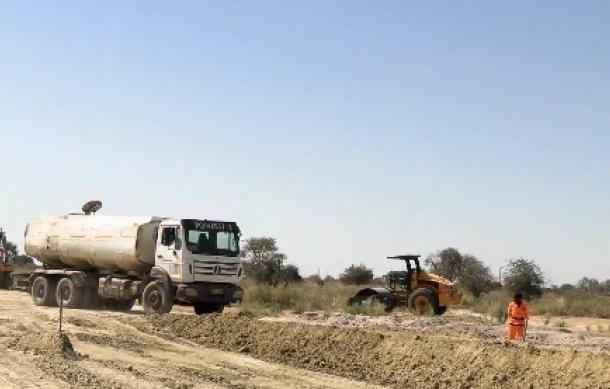
More than N$8.5 billion is needed for the rehabilitation and maintenance of road infrastructure in the country.
This was revealed at the Road Fund Administration (RFA) Business Plan Stakeholders Consultation for the period from 2026/2027 until 2030/2031.
The stakeholder consultation meeting also underlined the fact that a delay in road maintenance and rehabilitation will be more costly, stressing the need for increased funding and resource mobilisation in the sector.
"And we have to do something now. If you don't, then we're going to see a huge, huge impact in terms of the deterioration, but also in terms of the vehicle operation course that is going to increase. And I'm only referring here to your key transport corridors. And unless we make the key investments today, those costs are going to exponentially go up in the years to come if we do nothing now," said RFA CEO Aili Ipinge.
Currently, the RFA collects more than N$4 billion annually through revenue collection, mostly from the fuel levies, which represent 63% of the required amount.
Elton !Gaoseb, the RFA Executive for Programme Management, explained that "I remember at one of our last sessions, there was a recommendation or a call made to do away with fuel levies. I plan to conduct a thorough study on that, but sometimes a visual representation is sufficient to demonstrate our heavy reliance on it. And although this reliance is there, we are talking about a funding gap between N$8.5 billion and N$4.2 billion. That's the funding gap that we are referring to."
Stakeholders, including Transport Analyst at DNA Economics, Johann Van Der Westhuizen, looked at possible funding solutions, which include more funding from the government and from road levies and toll gates.
"You need to look at what a wider charging base would look like. And then you start with the other beneficiaries, and that's the national government and the private sector. The national government funding, which was also discussed in relation to the tax base, somewhat influences the private sector. So you start with more appropriately integrating the government funding as a future-looking option to widen the road user charging base."
The business plan recommends a combination of RFA and government interventions to close the funding gap in the next three to five years.