


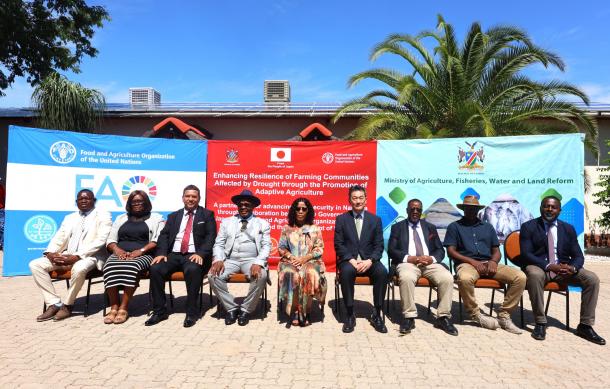
The Agriculture, Fisheries, Water and Land Reform Minister Inge Zaamwani has launched a N$46-million food security and climate resilience grant in Otjiwarongo.
The funding, supported by the Government of Japan and the Food and Agriculture Organisation, is aimed at programmes in the Otjozondjupa, Erongo, Hardap, Kunene and Omaheke regions. Minister Zaamwani said sustained financial and technical assistance has allowed the Ministry to respond to agricultural challenges more effectively.
"The Country Programming Framework that we are launching today is therefore aimed at strengthening adaptive agriculture and empowering our farmers by providing them with the necessary tools and knowledge they need to mitigate the effect of climate change. It is not enough to react to crises; we must predict them, prepare for them, and build systems that withstand future shocks and future disasters."
She said the ministry will strengthen food security information systems and early warning mechanisms to ensure effective decision-making, resource allocation and community mobilisation.
On his part, Japanese Ambassador Shinichi Asazuma said the grant will mostly target women- and youth-led households.
"The new project has a target of up to 6,000 mostly women- and youth-led households, ultimately positively affecting the livelihood of over 24,000 people in rural areas. These regions have been chosen this time around in order to scale out proven interventions which Japan has funded in other Namibian regions through the same successful trilateral partnerships with FAO and the Ministry of Agriculture."
Otjozondjupa Governor, John ||Khamuseb said climate-smart agriculture is no longer an option but a necessity.
"By equipping our farmers with low-cost techniques, drought-resilient crops, efficient water management systems and adaptive farming practices, we are preparing them to withstand climate shocks and to continue producing even under difficult environmental conditions."
FAO Assistance Representative Ferdinand Mwapopi had this to say.
"The emphasis on inclusion of women and youths reflects a shared commitment to inclusion, livelihood diversification and long-term food security at the household level. The project combines practical livelihood support with strong capacity development to be delivered through the government extension services with backstopping support and technical support from the Food and Agriculture Organization of the United Nations."
The partnership between Namibia, Japan and FAO dates back to 2022.