


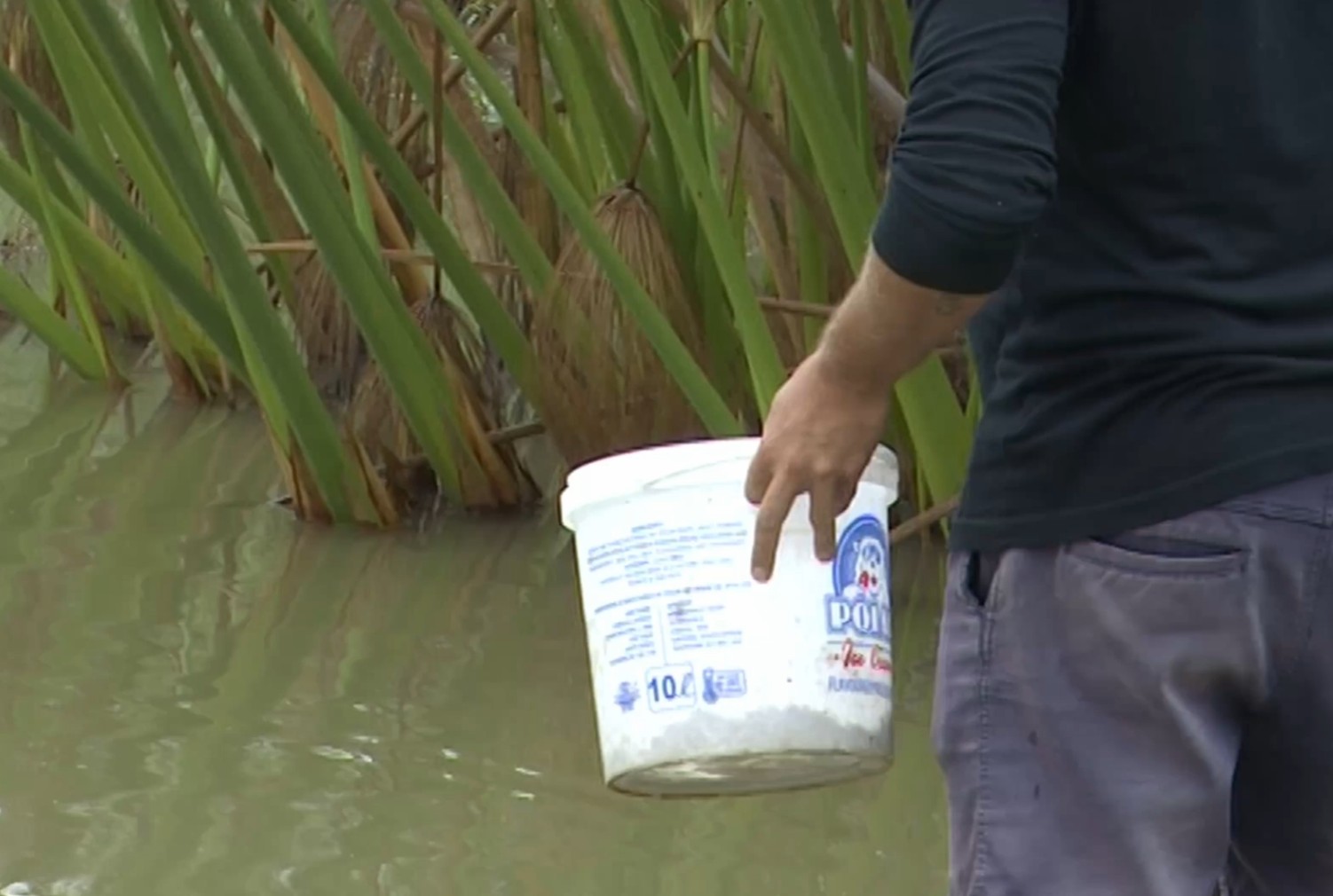
Some fish farmers in Kavango East have now resorted to letting their fish feed on the plant material found in and around the ponds for six months.
Farmers say they are unable to secure subsidised fish feed from the government due to shortages.
This is the Mbambangandu Fish Farm on the outskirts of Rundu.
If it weren't for the lack of fish feed, farmers like Len Van Zyl would be harvesting by now.
"We stocked the first dam with 500 fish. There are about 2000 fish in each pond, and there are six ponds, which means there are about 12 000 fish. They were producing very well; they were breeding fast and growing well, but then the feeding stopped. It's not very productive to harvest them now; we must feed them properly, and then I can start harvesting."
The farmers say they simply stopped feeding the fish because they cannot afford the prices in the local shops.
"You can buy it, but at a price of N$1200.00 a bag, then it's not viable to feed them. 50 kilograms lasts a week."
The Director of Aquaculture and Inland Fisheries, Rudolph Cloete, says the subsidised fish feed has been solved.
"The first shipment has arrived this week from Katima; it will then go to Kamutjonga, and from there on, they will distribute it to Rundu, Epalela and other fish farms. There are more shipments coming by truck."
Cloete says cumbersome procurement processes, budget constraints, and the merging of Fisheries and Marine Resources into the Ministry of Agriculture are just some of the reasons that led to the shortages.
"The budgets were not so much clear. Where is the budget for fish feed? It was split between agriculture, fisheries, and different budgets, so we had to get money from one budget to another. Luckily we managed at the end of the day."
The ministry was importing fish feed from Zambia, but it became difficult to procure. They have since found a supplier from Katima Mulilo.
The director says the subsidised fish feed was initially only meant to get the farmers started until such a time when they could procure it on their own.
"Government is not in the business of selling fish feed, but now it's becoming that the farmers are just relying on government, which is a bit of an issue. That makes it difficult to expand for more farmers because we only have limited fish feed that we can buy with the government budget."
Some fish farmers, such as Sofia Haingura, are calling for training on how to make their own fish feed.
"It's very expensive to create them, but if we try to source or farm the ingredients that we need to use to produce the feed, then I think it is doable."
Cloete says the ministry provides training on fish feed at their centre in Oshana, but it can also be extended to the Kavango Regions.