


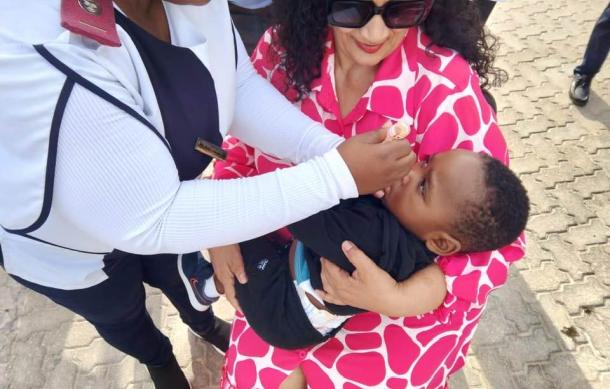
The Minister of Health and Social Services, Esperance Luvindao, has declared a polio outbreak and announced a third nationwide vaccination campaign from 20 to 23 April 2026 for children aged 10 and below.
Namibia has maintained a polio-free status since October 2008, marking nearly two decades of success driven by sustained vaccination efforts and strong disease surveillance.
However, that record is now under threat as the health authority officially declared a polio outbreak.
Providing an update, health officials said 81% of targeted children were vaccinated during round one, while coverage increased to 90% in round two.
Despite the improvement, Dr. Luvindao warned that the remaining gap leaves room for the virus to continue circulating.
The ministry, supported by the World Health Organisation, has urged parents to vaccinate children even if they have already received previous doses.
Concerns remain over cross-border infections from Angola and Malawi.
"Neighbouring countries are actively combating related polio virus type II detections as well, which paints a clear picture of the epidemiological threat that is surrounding us, requiring us to take immediate and decisive action. Zambia has reported one isolate from an environmental sample, which laboratory tests confirm is genetically linked to the very virus that we detected in Rundu. This case once again is proof of cross-border transmission. Malawi is managing a severe cluster, having reported one case of acute flaccid paralysis, with three contacts in that case testing positive, along with five additional isolates from environmental samples."
Dr. Luvindao says Namibia has strong preventive measures in place against polio, which the country can be proud of.
"No person in Namibia has been diagnosed with polio or paralysed by it during this period that we have declared from 2008. We have only detected the virus in sewage through environmental surveillance. This finding is an indication that we have robust and active surveillance in Namibia."
She explained that Namibia is dealing with a circulating vaccine-derived poliovirus, which emerges and spreads in communities with low immunity.
The virus multiplies in the human intestine and is transmitted through poor hygiene, particularly via the faecal-oral route.
"Every time an underimmunised child swallows this virus, their gut acts as an incubator, allowing the virus to strengthen. Then, the virus is shed back into the same environment. The oral vaccine we are using goes directly to the gut. But, by giving another dose, we are then building an impenetrable protective wall that effectively starves the virus, preventing it from finding new hosts and stopping it from mutating further."
Community leaders and media have been mobilised to raise awareness and combat misinformation.