


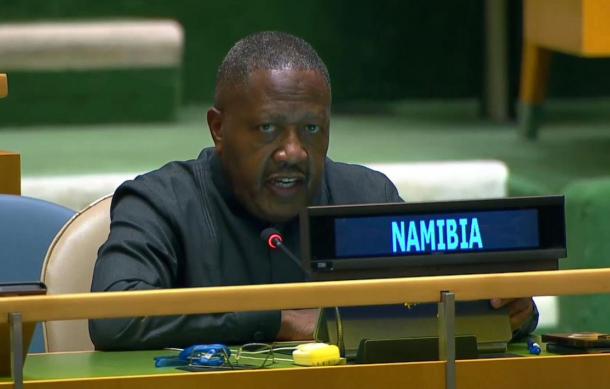
Namibia places the highest strategic value on the peaceful uses of nuclear energy.
Addressing the 11th Review Conference of the Parties to the Treaty on the Non-Proliferation on Nuclear Weapons at the United Nations Headquarters in New York, Permanent Representative to the UN, Ambassador Penda Naanda pointed out that the peaceful use of nuclear energy is the reason for the existence of the treaty.
Ambassador Naanda said Namibia remains fully committed to maintaining the highest level of safeguards on its nuclear material and related technologies.
He added that Namibia views nuclear science and technology as essential tools for its sustainable development, from powering industry, strengthening agriculture, improving public health, supporting water management, and building climate resilience.
The Namibian diplomat stated that as a leading producer of uranium, Namibia emphasises that access to peaceful nuclear technology must remain unhindered and affordable.
He added that Namibia's abundant uranium powers reactors across continents, contributing to energy security, climate mitigation, and technological advancement.
But he pointed out that the benefits and the structure of the global nuclear market continue to consign uranium-producing developing countries to the lowest rung of the value chain.
Ambassador Naanda stated that the Non-Proliferation on Nuclear Weapons Treaty’s promise of peaceful uses must translate into real opportunities for uranium-producing developing countries, including support for value addition and beneficiation, fuel cycle development, and the strengthening of national regulatory and safety capacities.
"Namibia has plans for its own nuclear power generation and therefore calls for a more equitable and transparent global nuclear economy, one that recognises the legitimate aspirations of uranium-producing states to move beyond raw material export and to benefit from the advancements their resources make possible."
The diplomat concluded that Namibia believes that the Comprehensive Nuclear-Test-Ban Treaty (CTBT) is an essential and irreplaceable instrument for preventing the qualitative and quantitative development of nuclear weapons.
"But the CTBT remains one of the most urgent unfinished tasks before the international community. Until it enters into force, the world will continue to live with the unacceptable risk of a resumption of nuclear testing, a step that would reverse decades of progress and further destabilise an already fragile global security environment."
Ambassador Naanda stated, therefore, that Namibia calls on all countries required under Annex 2 of the Treaty to ratify it without delay to close the door on nuclear testing.
Namibia is among the 178 countries that have so far ratified the treaty. However, for the treaty to enter into force, it requires ratification from all 44 specific Annex 2 states, which possessed nuclear power or research reactors during the negotiations in 1996.
Nine more of those Annex 2 states need to ratify the Treaty.