


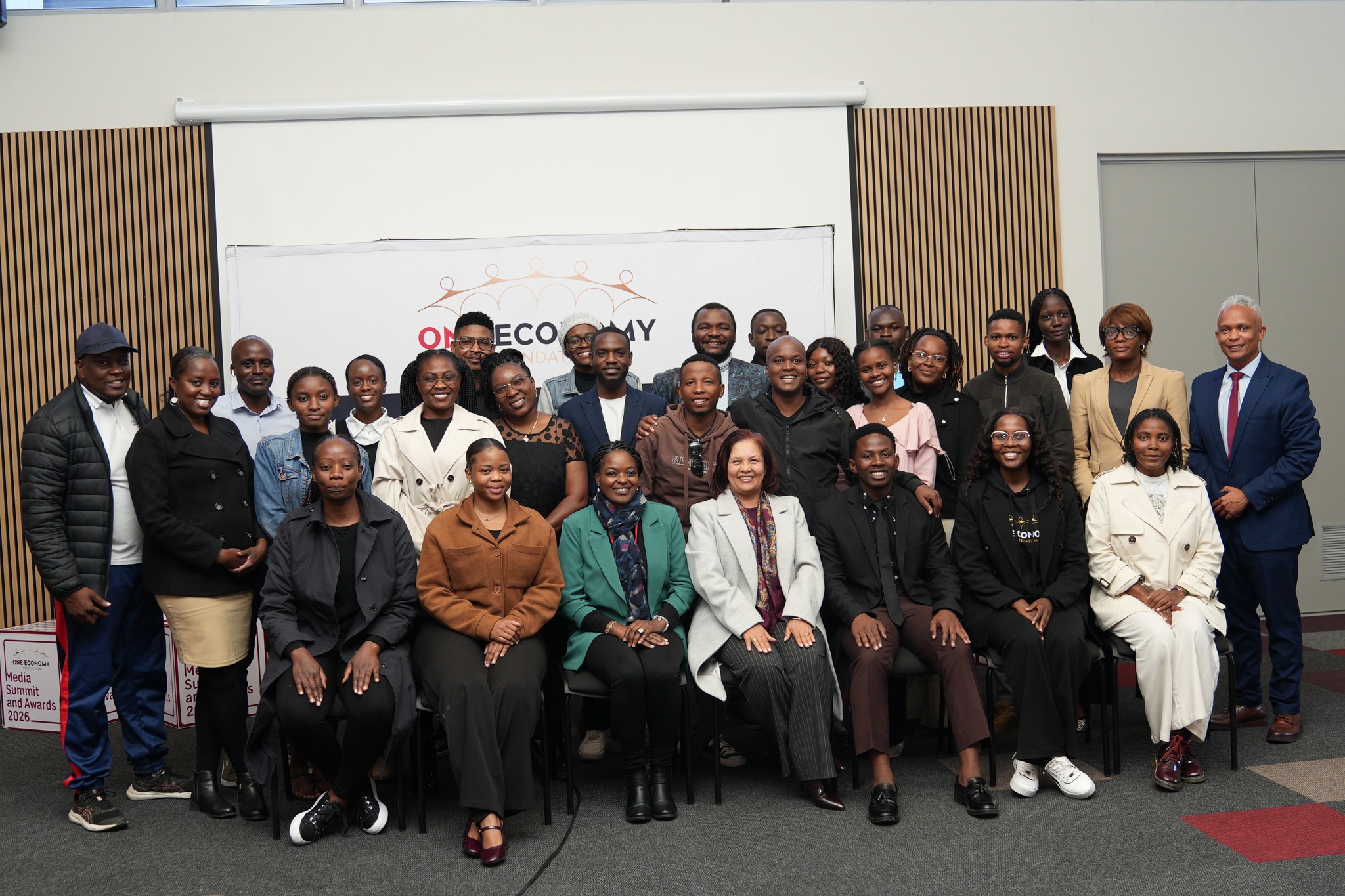
The One Economy Foundation hosted the third annual Media Summit in Windhoek.
The events brought together media practitioners, journalists, and healthcare professionals from across Namibia.
This year's media summit promoted ethical media coverage on sensitive social issues like gender-based violence and mental health.
The categories contested at the media awards include Best TV Journalist, Best Radio Journalist, Best Multimedia Journalist, and Best Newcomer Journalist – for those who practised for less than one year.
It also included the best male and female journalists.
The awards recognise journalists and media practitioners whose reporting focuses on issues such as gender-based violence, femicide, sexual and reproductive health rights, mental health, and child protection.
NBC News reporter Emil Seibeb won the Best Television Journalist award for a story on unsolved murders of women around Windhoek, while New Era's Isai Sipunga won the Best Journalist of the Year award.
NBC Kati FM producer and presenter Salimi Gerhard walked away with the Best Radio Journalist award.
The UN Coordinator to Namibia, Hopolang Phororo, highlighted the need for reporters to remain ethical while speaking on gender-based violence, sexual and reproductive health, and reporting.
"Media influences what societies normalise, what they excuse, what they tolerate and what they are willing to challenge. This is why ethical reporting cannot be treated as optional or seasonal. It cannot only emerge during the 16 days of activism against gender-based violence or in moments of national outrage. It must become embedded in everyday journalistic practice and editorial culture because media narratives are not accidental; they are shaped by decisions about language, framing, imagery, placement, repetition, and sometimes silence. And those decisions carry consequences."
Phororo also cautioned against normalising violence. "One of the most dangerous things any society can do is become emotionally numb to violence. When violence becomes ordinary, when harmful language becomes routine, when exploitation becomes entertainment, and when survivor exposure becomes normalised, society slowly loses its moral sensitivity."
Guest speaker and One Africa news editor Selma Ikela spoke about ethical reporting on matters of GBV and sexual abuse.
"So when journalists report on GBV or SHR, the dignity and the human rights of survivors should be upheld by protecting them from further harm, be it physical or psychological. We should minimise suffering, and we should minimise stigma and discrimination. So this means that the media should put the survivor at the centre of their story, prioritising their safety, confidentiality, dignity, and their rights."