


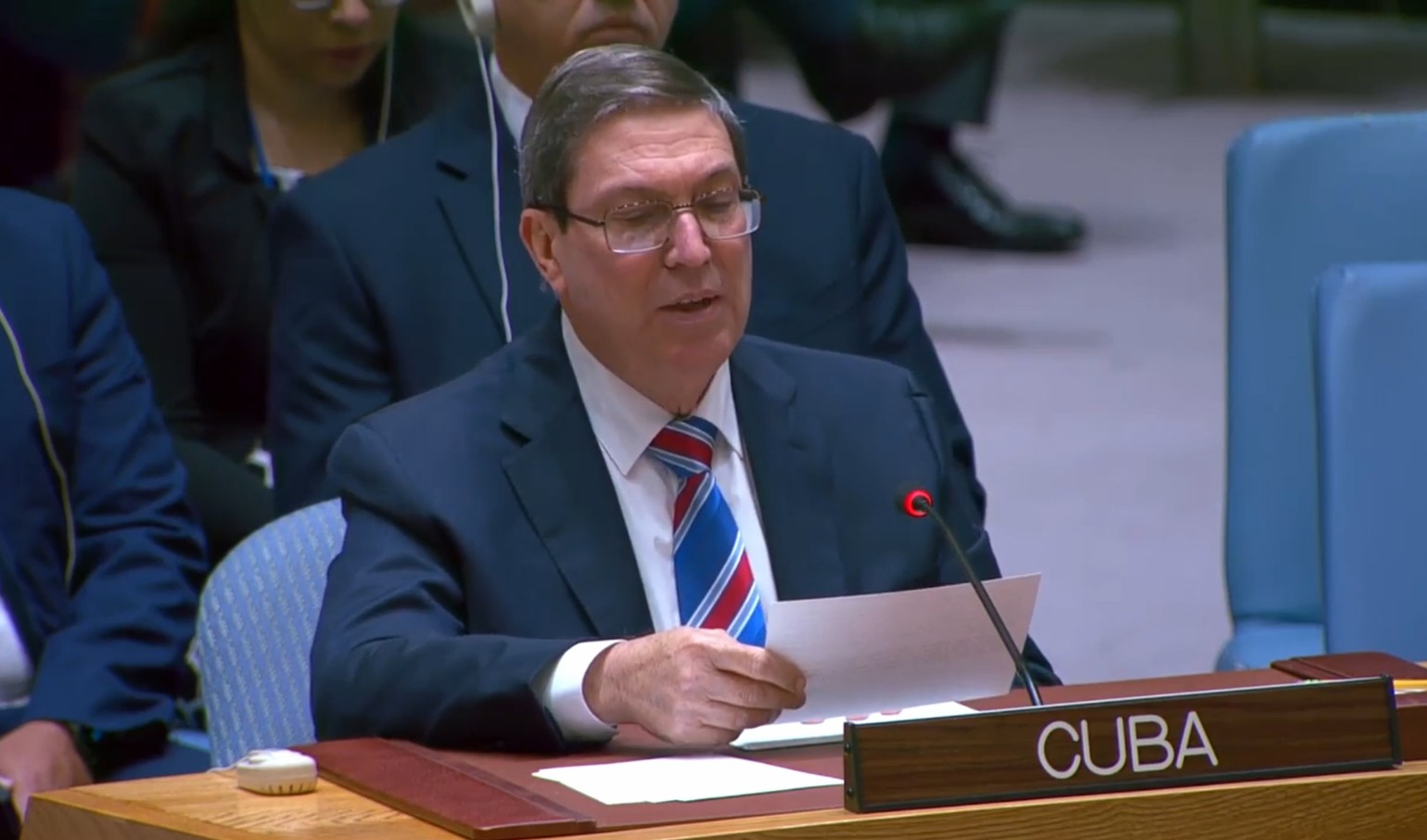
Cuba's foreign minister, Bruno Rodríguez Parrilla, has used the ongoing UN Security Council debate to direct sharp criticism at U.S. sanctions.
He warns that pressure on Havana could push relations toward dangerous escalation between the two countries and the entire Latin and Caribbean region.
During an open debate on international peace and security at UN Headquarters, Rodríguez Parrilla compared U.S. sanctions to a naval blockade, including the recently imposed energy blockade.
Narrating the hardships experienced by ordinary Cubans, he says these conditions are worsened by shortages of medical and other essential supplies.
"It is already causing deaths, as reflected in the doubling of the infant mortality rate from 4.0 to 9.2 per thousand live births and in the reduction of life expectancy among children suffering from cancer from 85% to 65%. A military aggression would unleash a bloodbath. Thousands of Cubans would die defending the Homeland and sacred values and principles. Young Americans would also perish, with neither cause nor ideal to defend, dragged into violence by an imperialist, neo-fascist policy of domination, plunder, and conquest."
The Cuban Foreign Minister appealed directly to U.S. citizens, particularly the youth, to reject what he called pressure from political groups pushing for confrontation with Havana.
The Cuban government maintains that the island nation poses no threat to American national security, as Washington extends the use of sanctions and pressure on other countries to isolate Cuba economically.
"For more than six decades, the U.S. government has manufactured pretexts to attempt to justify its criminal conduct. Despite the lack of progress and goodwill, and despite the lack of seriousness and coherence on the part of the United States, we remain willing to continue discussions; to address bilateral problems without interference in our internal affairs, political system, or elections; and to seek forms of civilised conduct and multifaceted cooperation, particularly in the areas of terrorism, drug trafficking, transnational organised crime, regular and safe migration, human trafficking, mutual economic compensation, and other matters."
The debate at the UN, being chaired by China's Foreign Minister Wang Yi, focuses on strengthening the principles of the UN Charter, with respect to sovereignty and the role of diplomacy in preventing conflict.