


In order for any economy to thrive, strong leadership, strategic planning and a skilled workforce are essential. However, Namibia has seen a growing number of graduates struggling to find employment, particularly in the education and nursing sectors.
Business Today's Daphne Amweelo finds out why this is the case.
While education and nursing professions were once considered among the safest career choices, changing labour market demands have resulted in an oversupply of graduates.
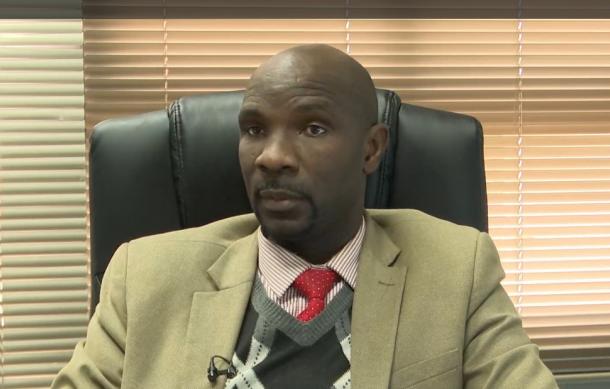
IUM Registrar, Dr. Aquilinus Nashilundo explains what is driving this trend and how institutions are adapting to better prepare graduates for the future.
"I think what caused the oversaturation in the two fields, particularly education and nursing, is market forces, if I have to call it that. Market forces over the past few years have seen a lot more vacancies. Let me say if I go back 10 years, there were a lot more vacancies in education as well as in the health sector, so of course the public and the students."
Dr. Nashilundo says universities are now placing greater emphasis on career guidance, encouraging prospective students to explore fields that are aligned with current and future labour market demands.
"We market our other fields, because we also know that these two fields, particularly education and nursing, are oversaturated at the moment. So we counsel the students to say, 'Look, instead of choosing these two, maybe look at these other fields.' So at the beginning we give those students those types of options and that type of counselling, but what you also do is that we are also advised by our stakeholders."
The Registrar also points out that professional councils have introduced stricter intake quotas in certain programmes, particularly nursing, limiting the number of students that universities can admit each year. While this helps maintain training standards, it also highlights the need for students to consider a wider range of career opportunities.
Looking ahead, Dr. Nashilundo believes the labour market will continue to evolve over the next decade.
Beyond graduate numbers, employers have also raised concerns about whether graduates possess the practical skills required in today's workplace. According to Dr. Nashilundo, universities are responding by strengthening work-integrated learning and practical training across their programmes.
"I've heard that sort of concern many times – that universities train graduates more in theory than in practicals. First let me separate fields of study. There are fields of study where practicality is naturally embedded. You cannot, for example, train a nurse without a practical component. The Health Professional Council will not allow you to do that. So when we are talking about practical skills normally. Yes, so what we have done for us as an institution is to ensure that all our graduates at least gain some relevant practical skills that are needed in the job market."
As Namibia's economy diversifies, higher education institutions are also shifting their focus towards sectors expected to drive future economic growth. Information and Communication Technology, energy, and the emerging oil and gas industry are among the key areas receiving increased attention.
With the world of work changing rapidly, universities are being challenged to produce graduates who are not only academically qualified but also equipped with practical and future-ready skills.