


The University of Namibia (UNAM) hosted a public lecture highlighting how artificial intelligence and historical aerial photographs could improve climate change research and environmental monitoring.
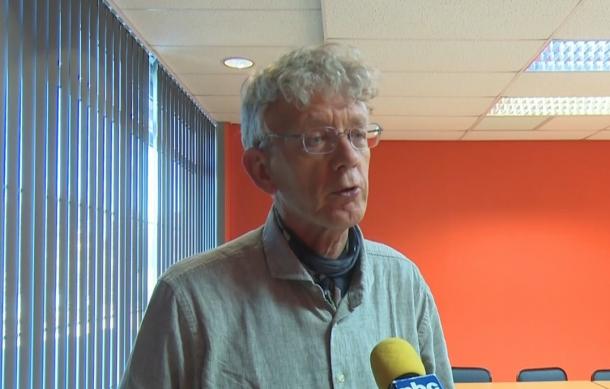
The lecture was presented by Professor Emmanuel Kreike from Princeton University, who introduced the 3TMAAP project.
The initiative is being developed in collaboration with UNAM and uses machine learning to analyse historical aerial photographs dating back to the 1940s.
Professor Kreike says current satellite imagery only provides information from around the year 2000, making it difficult for researchers to understand how environmental changes began.
"The current satellite imagery that they are using to assess environmental change can only show these changes since about the 2000s. So we are developing a methodology, in collaboration with our UNAM colleagues, to actually machine-read historical aerial photographs. In many territories, these aerial photographs already exist from the 1940s, almost every ten years. By using these photographs to look at how the environment changed from the 1940s, we see much deeper origins of these changes. Rather than starting at the 2000s, where most of the changes had already occurred, with our methodology, using these historical aerial photographs, we can literally see back in time and see how the environment in Namibia changed since the 1940s."
He says the project aims to bring a bridge to that gap by using historical aerial photographs to trace changes in Namibia's landscapes.
According to Kreike, the project will create three-dimensional models from historical photographs, allowing researchers, students and communities to visualise how landscapes, villages and ecosystems have changed over time.
Kreike says that extended historical data will also strengthen climate models by providing a better understanding of past environmental changes, leading to more accurate predictions of future climate trends.
The public lecture was organised by UNAM's School of Humanities, Society and Development through the Department of Humanities and Arts.