


Key stakeholders, such as the Integrated Rural Development and Nature Conservation (IRDNC) through the human-wildlife support team and conservancies in Kunene Region continue to play an integral role in maintaining human-wildlife conflict (HWC) related cases.
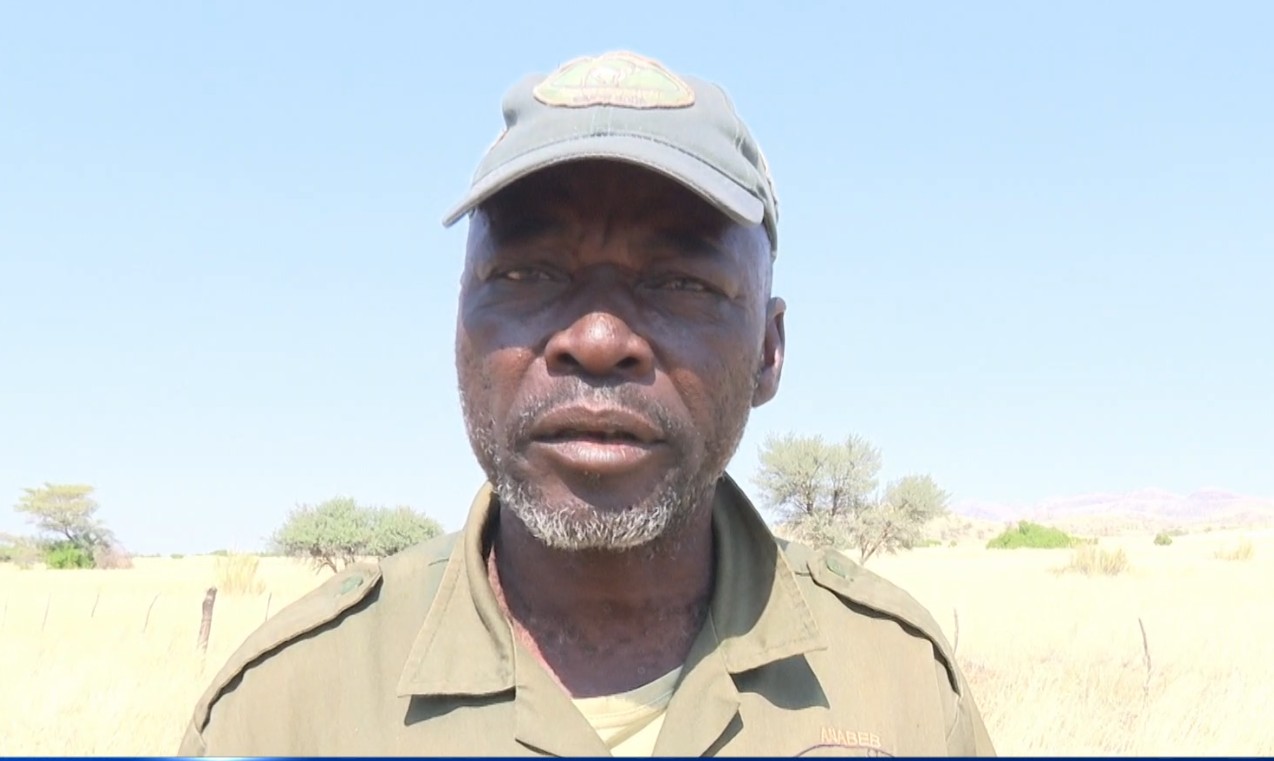
A Field Officer at Anabeb Conservancy, Ronald Karutjaiva pointed out that HWC remains a thorn in the flesh for many communities in Kunene region, therefore conservancies have come up with various measures to remedy the situation such as deploying game carts to monitor wildlife movement.
Karutjaiva added that the game carts also assist with record-keeping for livestock that are killed by predators and help compile needed documents that warrant farmers to be compensated for their loss.
“We have different groups of people that are taking care of wildlife as some look after, lion, rhinos and elephants and also we have the game carts that look after the other smaller wildlife, previously we use guard lion without anything that will tell us about their whereabouts but lately we have a system that can tell us about the movement of lions and how closer it is with farming communities and this helps us a lot and our people react on time to such challenges.”
A senior coordinator of the support team, Russell Vinjevold, also acknowledged that HWC derails the community.
“As an organisation, we predict that this was coming and we started putting in programmes to assist farmers trying putting mitigation measure to reduce the impact we worked closely with the ministry of environment with other stakeholders as well and developed and come up with human lion management plans looking at mitigation which such as eloping a lion rangers programme, putting up predator proof kraals, developing early warning system electronic or digital, we look at putting response teams to also respond if farmers pick up the presence of lions or any predators that are close by and someone will and say help and there will be somebody coming out.”
Vinjevold maintained that despite continuous support from stakeholders to mitigate HWC, there is a need for more awareness campaign sessions.