


Every person has their own way of selecting a hero, depending on the cultural and historical background, as well as political affiliation.
This also involves the ideological background.
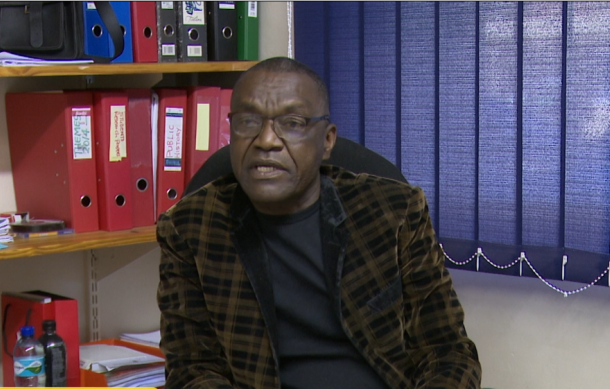
Those are words of UNAM's History senior lecturer, Dr Vilho Shigwedha, in an interview on what defines heroism.
The following insert fills us in more.
Dr. Vilho Amukwaya Shigwedha holds a PhD from the University of the Western Cape and is an author and researcher focusing on Namibian history, genocide, the liberation struggle, and heritage studies.
When you talk about heroism generally from a generic approach, I think you speak about a person who shows great courage, bravery, and a person of noble qualities. And also, I think, a person of remarkable qualities and exceptional qualities. Now, it's the question of how do you perceive me as a person of remarkable qualities? How do you determine that?"
Namibians around the globe pause on the 26th of August – annually – to commemorate the Namibian War of Independence, which began on 26 August 1966 at Omugulugwombashe.
However, Dr Shigwedha noted that, when it comes to equal recognition of heroes and heroines, there is still a lot to be done.
He further advised the National Heroes Advisory Committee to look into women, churches and some business people that stand firm with the liberation fighters.
"They provided medicine to plant combatants when they were suffering from malaria or other diseases or when they were wounded. But I mean, I haven't seen them being recognised. Not at all. So I think something needs to be done there, and we really have to go back into history and really make recommendations that these people have to be recognised."
The lecturer also raised concern about the lack of interest and funding for younger generations to study history at high-level institutions.
"For example, students who want to do history don't receive funding from the government. Not at all. It's all about science, mathematics, and things like that. But how can you talk about the importance? We attach importance to mathematics and to science when you don't attach importance to history. History is the foundation of humanity. If you have no value for humanity, and you only attach importance to science and mathematics, then that leads to destruction. Human destruction, that's all. Because you have no value, no respect for life. It's all about science and whatever, which can lead to catastrophe. So I think I also have to blame our government that they don't really attach importance, and also in switching like this one to history."
For historian Dr Shigwedha, true remembrance means widening the circle to also recognise women, churches and business supporters who sustained the struggle, and investing in the next generation of historians.
According to him, a nation that undervalues its history risks losing the moral compass that guides its future.