


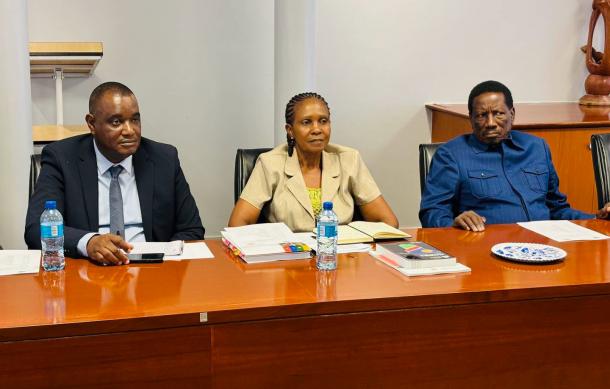
The African Peer Review Mechanism (APRM) has held a consultation workshop in Oshakati to validate the progress report on Namibia's country review.
The evaluation measures Namibia across four key areas: democracy, economic management, corporate governance, and socio-economic development.
The consultation targeted validating findings first outlined for the Oshana Region in 2021.
Socio-economic discussions initially highlighted statistics, noting that Oshana recorded 560 gender-based violence cases between 2018 and 2020.
Child marriages, teenage pregnancies, and high school dropout rates were also flagged as major regional challenges.
On a positive development, stakeholders praised the region's referral hospital service.
Another issue raised in Oshana was that people with disabilities kept 'hidden' in houses, not attending school, as special schools were in Windhoek.
This was refuted by participants who made it clear that Oshana has Eluwa Special School, where children with visual, hearing, and intellectual impairments were accommodated.
The region also benefits from a regional Anti-Corruption Commission office.
There was, however, a need to improve sanitation in Oshana in both urban and rural areas, healthcare, housing, water and electricity.
On democracy and political governance, Namibia earned good accolades for its progressive constitution, maintenance of peaceful co-existence and cordial relations with its neighbours through established bilateral commissions to settle disputes.
Namibia earned praise for championing civil rights, political gender equality, and legal protections for refugees and vulnerable groups. The country was also commended for implementing progressive policies to expand education access while actively fighting poverty, unemployment, and systemic inequality.
Oshana Governor Hofni Iipinge commended APRM, saying since its establishment in 2003, it has become one of the most important African instruments in ensuring good governance.
"The APRM supports member states in strengthening democratic governance, accountability and sustainable development. Today marks 9 years of Namibia accented to the APRM on 28 January 2017. During this period Namibia successfully completed two review reports with the implementation of their recommendation ongoing."
Ongwediva Mayor Naemi Amuthenu used the platform to highlight severe financial bottlenecks.
"We have our own oxidation ponds during the rainy season; they overflow to the communities' residences. They get frustrated because we could not afford to establish the water treatment plant; the fund is not there. There is a need for equitable structured funding for all the local authorities because all the residents need the very same services."
Oshakati Mayor Leonard Hango urged the central government to take full ownership of servicing urban land, noting that the financial burden has become entirely unsustainable for local authorities.