


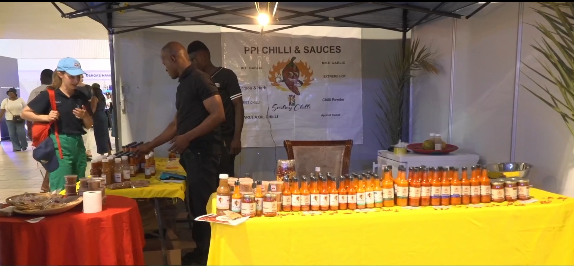
The journey from a home-based idea to a commercial operation comes with challenges, ranging from access to skills and markets to meeting the demands of a growing customer base.
Kokeni PPI Chilli is one such Namibian enterprise, using chilli production and processing to create value from locally produced agricultural products.
Founded in 2022 by Peyavari Tjaverua and Rosalia Nekongo, Kokeni PPI Chilli started with a homemade chilli recipe before developing into a small-scale food-processing business.
The company processes chilli into products including powder, sauces, paste, seeds and chutney.
“We started to commercialise our products by bottling them and putting labels on them. Then it became difficult to find chilli, so we decided to plant our own. Now we plant, harvest and add value to the chilli, turning it into a product that we named after our children. PPI stands for Paulina, Peya and Immanuel,” explained Tjaverua.
Access to training and business support has also been part of the enterprise's development. The business received training through the NIFA Academy in collaboration with Standard Bank, which it says helped strengthen its operations and move the initiative towards a more formalised enterprise.
It has also partnered with the Agro-Marketing and Trade Agency (AMTA) to supply chilli-based products in bulk.
“But there are other organisations that do not produce chilli, like NIFA Academy. They found us selling on the streets at the mall at SPAR. They took us in and gave us training. Now we have designed our own logo, and now we have also gotten our barcodes through NIFA in collaboration with Standard Bank."
Expanding beyond Namibia remains a long-term ambition, as it seeks to establish markets for locally processed products outside the country.
Tjaverua said international expansion would also create an opportunity to expose consumers in markets such as China to products produced by Namibian small businesses.
“We are also grateful to the government. They took us to China, where our product is currently displayed in Changsha, in Hunan Province, at a pavilion. The Chinese people love chilli and bought all our products. I had to stop them after the last three bottles because we needed to keep some as samples to prove that the product is ours. In the future, with financial support, we will be able to explore international markets, including Germany and other countries, as well as the SADC region.”
The business also places emphasis on transferring knowledge to younger generations and encouraging women, young people and persons with disabilities to pursue entrepreneurship.
Such enterprises form part of efforts to increase Namibia's local production, develop entrepreneurial skills and create opportunities for people to participate in the economy beyond traditional employment.
Kokeni PPI Chilli’s experience shows how a small, household-based idea can grow into a commercial venture, while highlighting the importance of training, market access and support for local enterprises seeking to expand