


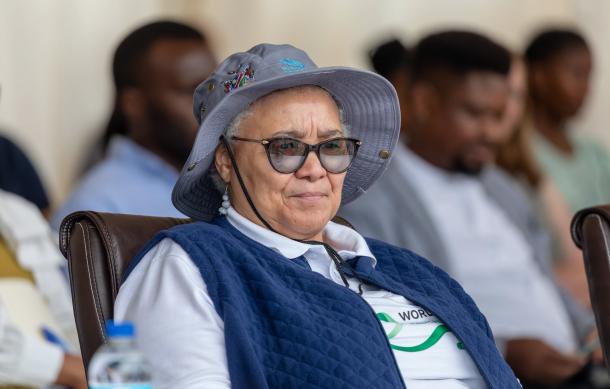
More than 100,000 mental-health service contacts were recorded in Namibia in the 2024/2025 reporting period, while the suicide rate across the country remained above the estimated African regional average.
Vice President Lucia Witbooi says the figures should not only be counted but should drive changes in how Namibia prevents mental illness, provides care and responds.
Vice President Witbooi was speaking at the Mental Health Centre in Windhoek.
She said mental health must be treated as a fundamental part of overall well-being.
This year's World Mental Health Day theme focuses on lived experiences and ensuring that real voices contribute to real change.
"Our stories are not just narratives of struggle; they are blueprints for a better system. Your courage to speak your truth breaks the chains of stigma that have silenced so many for far too long. By sharing your journey, you transform your passive recipients of health care into active agents of change. Please continue to share your experiences so that others who may also be facing similar challenges may be encouraged by your testimonies. In this way, we will break the chains of stigma."
Witbooi said people living with mental health conditions often face challenges beyond their conditions, including fear of judgement, being misunderstood and being excluded from decisions about their own lives.
She encouraged people to share their experiences, saying their stories can help others facing similar challenges and contribute to reducing stigma.
Witbooi cautioned that the current data around mental health only reflect people who accessed mental health services and do not show how many people still need help but cannot access care.
"Numbers do not lie, and in Namibia they tell us that our mental health landscape requires immediate and dedicated attention."
This is a resident at the Windhoek Mental Health Centre, holding three degrees in medicine, including surgery. She was diagnosed with a mental condition in the year 2005.
She shared her story.
"I did my degree while I was still diagnosed with mental illness, and I got married, and I have two children. I thank God that I was able to make it, but it was challenging when I lost my husband. Then I had to resign from my work, but I wasn't bothered. Thank God for that. And I just want changes for the SPD patients so that they don't have to stay for an indeterminate period here at the centre so that all over the world, especially for SPD patients, there's a lot of stigma about mental illness, so I want it to change. And I'm thankful to all the multidisciplinary team for supporting all of us and for our family and friends."