

The Chairperson of the Economic and Social Justice Trust, Herbert Jauch, believes that the international system is increasingly shifting towards what he described as "a law of the jungle," where military power determines outcomes rather than international law.
Jauch said this approach promotes the idea that might is always right, with military strength becoming the defining factor in global relations.
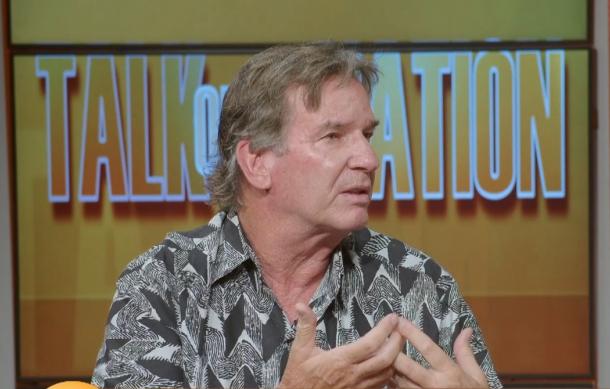
Speaking on NBC's Talk of The Nation, Jauch argued that such logic could grant powerful states the perceived right to subjugate weaker nations, either through direct military intervention or under false pretenses.
This trend, he highlighted, has serious implications for smaller states, which now face growing insecurity and uncertainty.
Jauch warned that aggressive foreign policies by major powers risk pushing smaller nations to seek new alliances and security partnerships, a development that could ultimately backfire on the very powers driving such confrontations.
“And this is the kind of dialectics at play there. The more brutal the US becomes, the more interventionist they become, and the more people will turn away from them. And I think they are very worried about losing that hold. And one can describe it as a declining empire and the last kicks of a dying horse. But it's a brutal stage that we are seeing, and Venezuela has just shown it."
He further stated that the United States underestimates Venezuela's political history and public consciousness, warning that Venezuelans are far from passive actors in the current standoff.
“They placed emphasis on free healthcare, free education, community-based housing, community councils, and community banks being established as forms of grassroots democracy. And that has been an inspiration to many other countries in the world. Now, if the US makes those statements now, and Venezuelans hear that, even those of the opposition parties, they will be extremely careful, cooperating blindly with the US now, because then their own people will see them."
A Lecturer at the School of Military at UNAM, Professor Robert Iroanya argued that international law is meant to prevent unilateral actions by powerful states, regardless of whether they remain dominant or are in decline.
He further stressed that one of the fundamental weaknesses of international organisations, including the United Nations, is the lack of independent enforcement mechanisms.
He said these institutions depend heavily on member state contributions, with the United States being the largest financial contributor.
“We have also seen that the fact that many countries are not very scared of going against the United Nations. So if you're not going to, if you're not in favor of the United Nations, I mean, sorry, in favor of the United States, you are likely to face economic sanctions. So we are witnessing an ideological kind of, you know, battle going on here. And the US is trying also to make sure that it claims its face of influence,” added Professor Iroanya.