


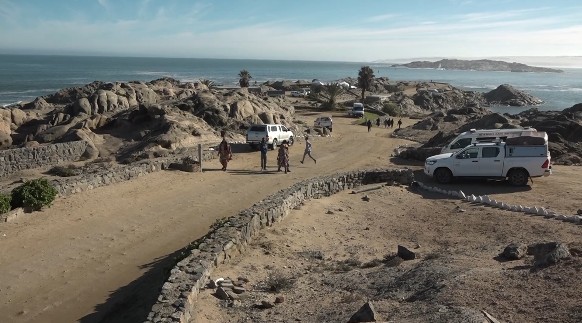
The Shark Island site, which serves as a reminder of the 1904-1908 genocide horrors, must be guarded against any form of erasure, neglect or disintegration.
The Deputy Speaker of the National Assembly, Phillipus Katamelo, made the call, delivering the keynote message at Genocide Remembrance Day held on the island near Lüderitz.
Katamelo further called on the youth to protect the history of Shark Island against distortion.
The second anniversary of the Genocide Remembrance Day, which the government proclaimed in 2024, was commemorated under the theme 'From Genocide to Renaissance'.
Katamelo debunked perceptions that the government unilaterally decided on 28 May as Genocide Remembrance.
"The memory must challenge us to build a society in which dignity is protected, diversity is valued, and human rights are defended without compromise. It must also remind us that healing requires truth and that reconciliation only grows where truth is acknowledged openly with humility. To descendants who are gathered here, I say your pain is not invisible, your history is not forgotten, and your call for duty is heard."
Katamelo pledged that the government will continue to honour the memory and victims of Shark Island, as well as all sites of colonial genocide, through education, perseverance, steadfast commitment, and restorative justice.
The Ambassador of Germany, Thorsten Hutter, paid tribute to the victims of the genocide, which he described as the darkest chapter in Namibian history.
"The governments of Germany and Namibia want to conclude the Joint Declaration, which recognises the genocide and our wish for reconciliation. I am here today to assure you that Germany is committed to the path of atonement and reconciliation. Reconciliation, as President Steinmeier said, is not about the past; it is about taking responsibility for the past, and it is a commitment to a better future together."
Hutter hinted that the German-Namibian Joint Declaration Agreement on genocide, apologies, and reparations is expected to be concluded before the end of this year.
Both the ||Kharas and Hardap governors addressed the Genocide Remembrance Day gathering.
Dawid Gertze said, "The genocide must be taught in our schools, documented in our institutions and preserved in our national consciousness. Young Namibians must understand where we come from, what our people endured and why justice, reconciliation and human dignity matter."
On his part, Riaan McNab said, "Genocide against the Nama and Ovaherero people was not only an attack on lives. It was an attack on identity, land, culture, dignity and future generations. Yet, despite this painful history, our people rose again."
Speakers also emphasised that remembering is not only about the past but also about healing and rebuilding the future for generations to come.