


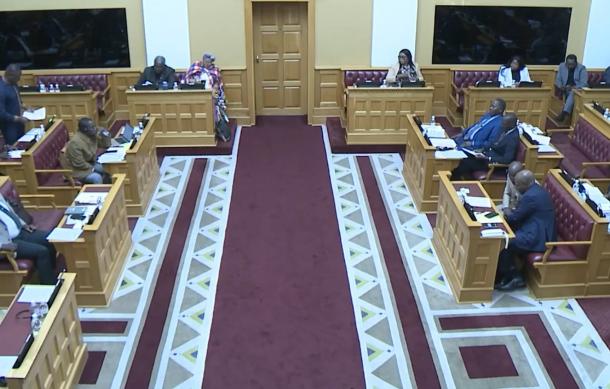
During yesterday's session of the National Assembly, members of the opposition expressed resistance toward the proposed Land Bill, stating that they cannot approve it in its current form.
The Bill aims to address issues regarding land reform and distribution, ownership rights, land administration, communal land management and resettlement.
AR MP Tuhafeni Hnagula says the Bill concentrates power in the executive, reserves loopholes for foreign land control, and leaves the urban land crisis outside the reform framework.
"The bill has three key structural weaknesses, and these are that it excludes the places where the land crisis has become a humanitarian crisis, which is urban land, unserviced land, informal settlements, and the delivery of housing. Number two, it places excessive discretion in the minister, then calls it administration. And number three, it claims to ban foreign land ownership but reopens the door through renewable occupation rights and weak control mechanisms."
IPC MP, Michael Mulunga, says that despite being in agreement with the establishment of communal land boards, community members should be granted the opportunity to vote for their own leaders.
"Filling or failing to nominate a person for the appointment to the land boards following the request of the minister reverts back to the minister to appoint a member of the board." Such a provision on our members grants the minister too much power and can open a pandora's box for the minister to appoint his or her friends or grant political favour to him or a party member."
APP Leader Ambrosius Kumbwa, who also opposed the Bill, stated that the Bill puts too much power in the hands of the executive, disregarding traditional authorities.
"Disregarding traditional authorities is equivalent to modern-day colonialism and will erode our identity as Black African Namibians. Traditional leaders live permanently among their people and serve for life, unlike ministers who serve limited political camps."