


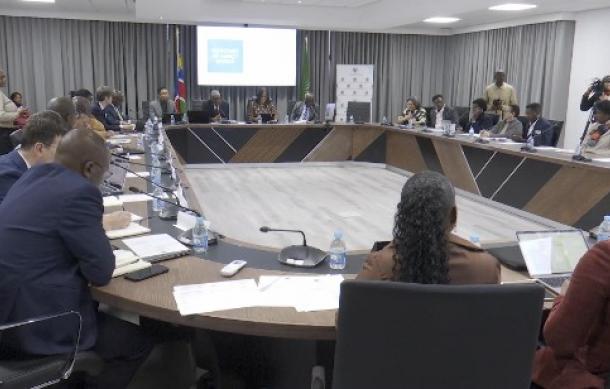
The World Health Organization, along with various health experts, has officially launched its Cancer Impact Review Mission in Namibia.
The mission aims to review prevention programmes, diagnosis and treatment services, early detection and screening as well as cancer policies, strategies and financing.
The mission, which takes place over the course of five days, will also provide recommendations for strengthening cancer control in the county.
Snr Programme Officer for Cancer Control at WHO, Arsen Juric, said, "We do have experts around the table who are covering areas from prevention through to early detection, diagnosis, treatment, palliative care, cancer registration and surveillance, as well as overall national cancer control planning, governance, financing, but really very much looking at the health system and how that can be further strengthened, whether it's in a short, medium, or longer term."
Health and Social Services Minister Esperance Luvindao says cancer has become an aggressive challenger to the health and development of the African region.
Dr. Luvindao pointed out that cancer drains household savings, a development issue that affects productivity and a social issue that leaves children orphaned.
"I am happy that the experts that have joined us touched on the issue of prevention. That, for me, is truly a core focus, particularly for Namibia, where prevention, prevention, prevention must be emphasised more as we move forward. And what does prevention mean? Prevention includes early screening, prevention includes early detection, because when we are able to detect early, we are able to treat early, we are able to treat sooner."
She stated that the ministry is working to establish the Namibia National Cancer Registry, which will enable the health sector to identify gaps as well as to make informed decisions when dealing with cancer patients.