


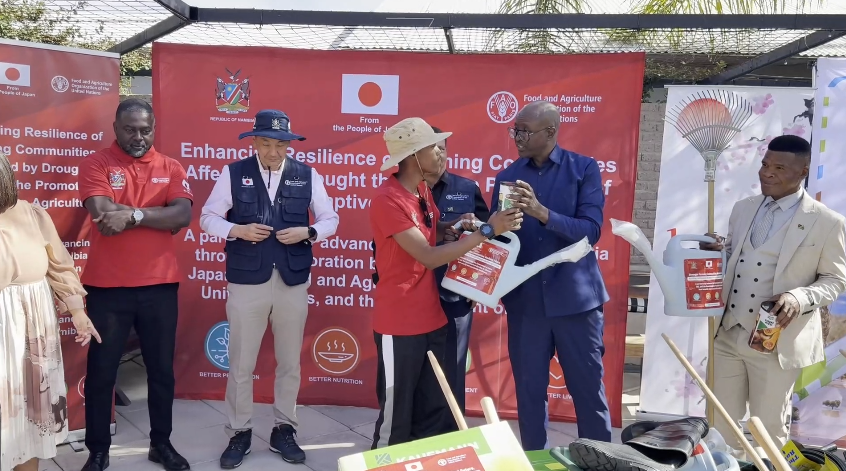
The Hardap Region has become the first beneficiary of a new Food and Agriculture Organisation (FAO) and Government of Japan-funded initiative aimed at strengthening the resilience of farming communities affected by drought.
The symbolic handover in Mariental marks the beginning of a multi-million-dollar project that will provide climate-smart agricultural technologies.
Hardap Governor Riaan McNab welcomed the initiative, describing it as a significant investment in the region's future.
"This commitment is now being placed directly into the hands of our farming communities. Hardap was deliberately selected because of both the challenges we face and the opportunities we have to strengthen food security and sustainable livelihoods."
The project, funded by the Government of Japan and implemented by the FAO in partnership with the Ministry of Agriculture, will run until November 2027.
It will provide farmers with agro-input packages, livestock support, solar-powered irrigation systems, hydroponic technology and climate-smart agriculture training.
Ferdinand Mwapopi is FAO's Officer-in-Charge in Namibia.
"In a region where water is the defining constraint, these technologies respond directly to the realities that Hardap farmers face every day."
Japan's Ambassador to Namibia, Shinichi Asazuma, says the initiative forms part of his country's continued support for Namibia's food security and climate resilience efforts.
"Today's occasion is very special because the Embassy of Japan, representing the Government of Japan and our partners FAO and the Ministry of Agriculture, Fisheries, Water and Land Reform, elected to present the first consignment of the procured farming inputs to the Hardap Regional leadership."
Delivering remarks on behalf of Agriculture Minister Inge Zaamwani, Acting Executive Director Alfred Sikopo reaffirmed the government's commitment to ensuring the project benefits those who need it most.
"Government acknowledges this agricultural identity and is investing in it, not replacing it. MAFWLR's extension officers are already embedded in this region. This project strengthens what they do, equipping them with better tools, updated training materials, and proven FFS and SHEP approaches to serve Hardap's farmers more effectively."
The initiative targets 6000 youth and women-led households across Hardap, Erongo, Kunene, Omaheke and Otjozondjupa regions.