


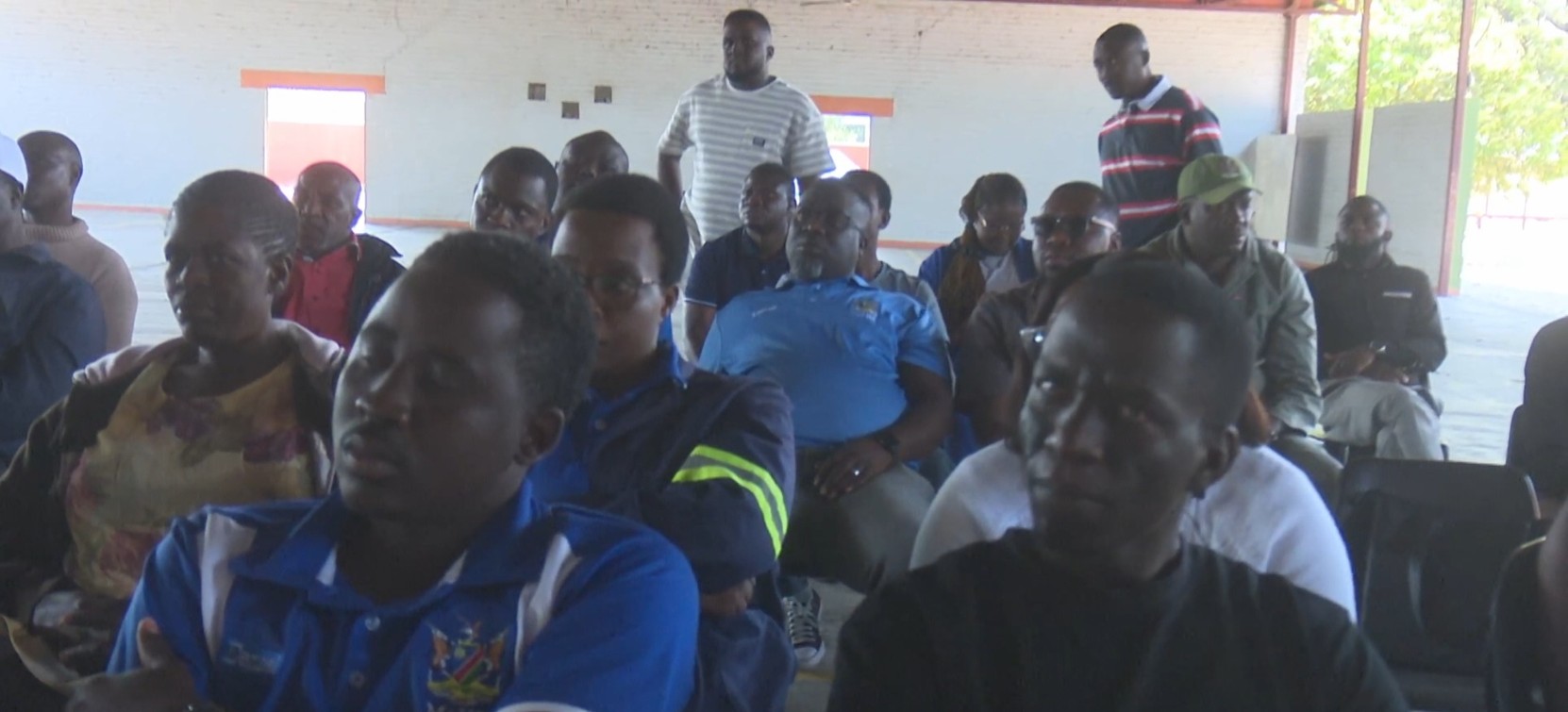
Awareness campaigns and community sensitisation on the Indoor residual spraying (IRS) programme have kicked off in the Zambezi region with a team from the Ministry of Health and Social Services (MoHSS) travelling to constituencies to engage communities.
The region considered to be a hotspot for malaria outbreaks has recorded 32,730 cases of the 122,127 confirmed cases nationwide and 21 deaths this year.
According to a report by the MoHSS, IRS remains one of the most effective malaria prevention methods; however, despite continued implementation of IRS, high refusal rates by community members have resulted in the country's failure to achieve its intended targets.
"Our plea is that all our community should have a buy-in to open their homes so that we enter those homes and protect them. As you know that indoor residual is the backbone of malaria program. It protects the community, so they need to allow us to enter their homes and do a spray. The chemicals are safe, there is no harm, highlighted, MoHSS Director for Special Programmes, Idah Mendai.
Mendai said the government invests significantly in IRS campaigns; however, the desired results are yet to be achieved.
"There are a lot of resources, such as vehicles, human resources, and so on. But the output is not pleasing. Last year alone we just covered 40%, while WHO target talks of 85% for the community to be protected. So our target this year is 85% to ensure that we even bypass that target to make sure that our people are protected and no lives should be lost when it comes to malaria."
Mendai also called on community leaders to assist with collaborative efforts in mobilising awareness across their communities.
The IRS campaign will be launched in Divundu on the 2nd of September.