


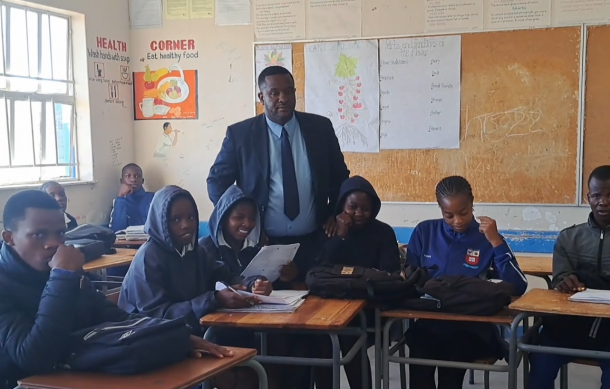
Omaheke Education Deputy Director Eliakim Kavari has urged schools to put in extra effort as they prepare for the final semester of the academic year to achieve better results.
Kavari made the remarks during an engagement with schools in the Aminuis Constituency.
Kavari emphasised that education is a critical sector requiring maximum effort from its staff, even as the government does its best to improve it.
Kavari indicated that despite regional efforts to maximise the provision of resources to local schools, securing sufficient teaching and learning materials remains an ongoing challenge.
The Deputy Education Director added that a strong education foundation remains one of the focal areas that needs serious support if the region wants to become consistent in terms of producing desired results.
"I have also realised that the transition from Grade Seven to Grade Eight is a significant problem. Over the past three consecutive years, 70% of learners from Grade Seven in the Aminuis Constituency have been transfer cases. I have examined the statistics for Rietquelle in terms of results over the past three to four years. In Grade Eight, 80% of those children, when they reach high school, are forced to repeat because they are coming from Grade Seven with insufficient subject knowledge. Therefore, we want to revamp and close the gap between primary and secondary education. That is why we have proposed to hold an education indaba, where we can sit together as a team, exchange programmes, and establish a blueprint for the constituencies."
Kavari emphasised that community support boosts school performance, making stakeholder involvement critical as final exams draw near.
"I think this is the time for children, or learners, to be relieved from all other activities. This is the time for students to be given the opportunity to study and revise. It is also the time for parents to invest in their children's education, particularly by paying for extra classes. Children should be emotionally fit, experience less stress, and have a balance of work and rest. Only then can we produce results on a national level, not just in Omaheke. If a child is not performing well in Otjozondjupa, it will ultimately affect us all. Therefore, it must be a national programme where every region strives to ensure that learners are performing to the best of their abilities."