

Namibia is seeking U.S. investment to drive industrialisation, expand energy production and ensure its mineral wealth creates jobs at home.
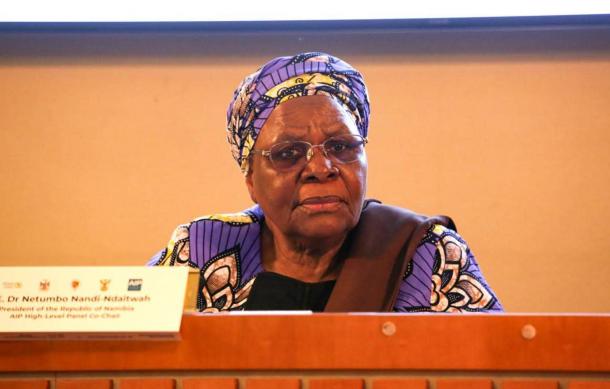
President Netumbo Nandi-Ndaitwah says the country wants to move away from exporting raw materials and attract investment in value addition, oil and gas, green hydrogen and renewable energy.
She addressed the U.S.-Namibia Presidential Roundtable in New York, organised by the U.S. Chamber of Commerce on the margins of the 81st UN General Assembly.
"Our country being a mineral base, and for too long, I think the whole world knows that our resources have been leaving the continent, including Namibia, as raw material. And the result is obvious to everybody: Africa remains a rich continent, but a continent where the citizens are very poor, and Namibia is not an exception. We have set ourselves for industrialisation, and that's why we call for value addition or beneficiation."
The President is also positioning Namibia's energy mix policy as a catalyst for industrial development, with opportunities spanning oil and gas, green hydrogen and renewable energy.
She says the country's energy transition, however, must accommodate the development needs of African economies.
"In Namibia, we have decided to go for an energy mix. That is why we talk about renewable energy, and now we also have oil and gas that has come in. And as much as we are part and parcel, and we believe in the Paris Agreement, we are saying justifiably that the energy transition should not be done at the expense of the developing countries, including Namibia. So therefore, we are not looking at a competition between the clean energy and the conventional energy that has been used over the years. So for us, we need space for us to develop, and that is why we are encouraging the business communities to invest in our energy, oil and gas, hydrogen or green hydrogen, invest in wind, invest in wave, and any other technology that can increase or make us energy sufficient in our country in order to take care of our people."
Namibia is also marketing its ports and transport corridors as gateways to regional and international markets as a deliberate move to attract investors seeking access to the SADC and the African Continental Free Trade Area at large.
The U.S. Chamber of Commerce sees opportunities in Namibia's offshore energy industry, critical minerals, manufacturing, tourism and digital economy.
Its chairperson, Ross Perot Jr, reiterated, "The Orange Basin represents one of the world's closely guarded, watched offshore energy frontiers, with major discoveries attracting sustained interest from US firms. Namibia's deposits of lithium, graphite, cobalt, rare earths, and uranium position it as a critical partner in diversifying the US supply chain for the energy transition. We're here to listen, to share the perspectives of the U.S. private sector, and to explore how we can translate Namibia's extraordinary potential into tangible, mutually beneficial outcomes."
The U.S. energy administration is also seeking closer cooperation, particularly in oil and gas development and energy investment at large.
U.S. Assistant Secretary of Energy and International Affairs Kaveh Farzad says American expertise in oil and gas could help Namibia develop competitive markets and attract foreign capital.
"No single sector creates more opportunities for partnership than energy, and knowledge-sharing from our experience in upstream and downstream, both oil and gas, will mean more efficient production and more competitive markets that can attract foreign investment. So what we are all about in the Trump administration is how we can help Africa and countries like Namibia develop the energy resources that Africans and Namibians want, and that's going to be all over the map."
The U.S. Chamber of Commerce is the world's largest business organisation, with members ranging from the small businesses and chambers of commerce across the states, industry associations and global corporations.