


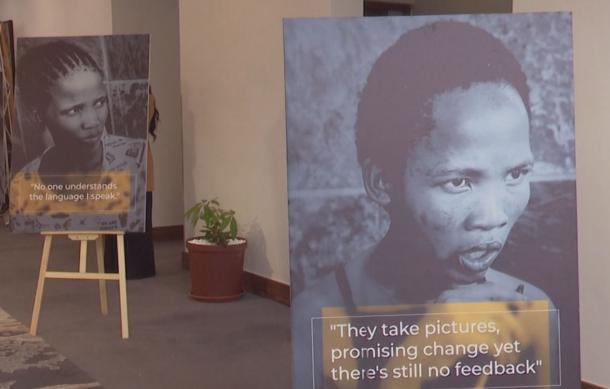
Leaders from civil society, government and international partners came together at the Amplifying San Voices Conference, saying Namibia must go beyond promises and take meaningful action to uplift its most marginalised communities, the San!
The Director of the NMT Media Foundation Trust, Zoë Titus, said the daily struggles of the marginalised people are a real issue, and removing the barriers that prevent the San from reaching their full potential should be addressed urgently.
"During our community dialogue, when our team travelled throughout the country and then especially to Tsumkwe, we met with members of the San community whose marginalisation is starkly evident. A community that feels that they are invisible, who feel that they cannot actively participate as citizens in a democratic Namibia. This is a community that, for lack of a better phrase, feels forgotten and invisible, struggling to survive at the fringes of society. And therefore, at the heart of this conference is a commitment to social justice, a belief that everyone, everyone, regardless of background, deserves equal opportunities and protection."
The conference is part of the New Narratives, New Voices project, a three-year EU-funded initiative aimed at amplifying unheard voices and informing policy through community dialogue.
Titus stressed that the project is not just about inclusion – it's about transformation.
Ombudsman Basilius Dyakugha added that while paperwork addressing the needs of marginalised communities was finalised with government input, it has yet to be acted upon.
"The document covers critical issues like access to land, representation, and participation. We need to bring it off the shelf and into the Cabinet for approval."
European Union Ambassador to Namibia, Ana-Beatrice Martins, echoed these concerns but also noted that Namibia has made significant progress in ratifying international treaties and creating its own National Human Rights Action Plan.
"As you know, in all our countries, the challenge is always the enforcement of laws. The San people continue to face deeper interconnected challenges. These include, above all, historically related land dispossessions; discrimination with serious consequences for access to education, health care, and employment opportunities; socioeconomic marginalisation; and the risk of losing their traditions and language."
However, the government has implemented various programmes aimed at improving the lives of the San community, including the San Development Programme and an EU-funded project to promote their rights.
These efforts focus on addressing marginalisation, promoting inclusion, and strengthening the legal rights and capacities of San communities.
There are also government-targeted interventions to uplift the living standards of marginalised communities, integrate them into the mainstream economy, social grants and benefits as well as exemptions from school fees.