


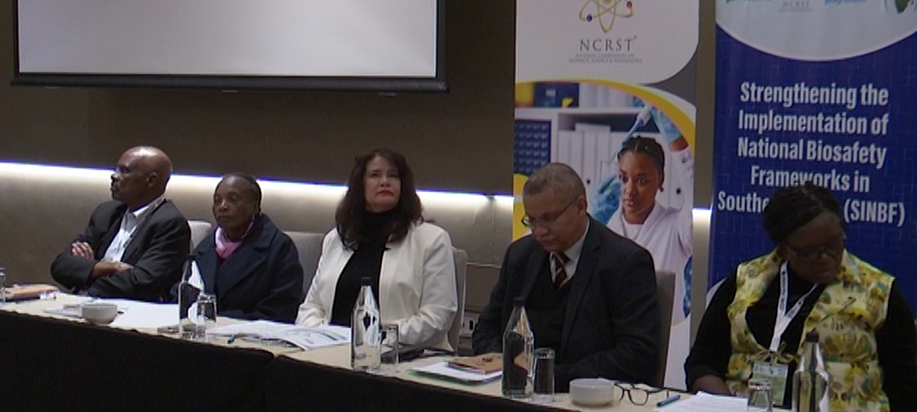
The National Commission on Research Science and Technology (NCRST) is hosting a training of trainers workshop focusing on establishing administrative and institutional structures for the implementation of the National Biosafety Framework.
The week-long workshop will strengthen technical capacity, enhance regional alignment, and promote national ownership of biosafety governance.
The workshop will mark a significant milestone in the biosafety readiness and resilience of participating countries.
NCRST's Chief Executive Officer, Anicia Peters, said the workshop is a testament to the commission's commitment to ensuring the effective implementation of the biosafety framework in Namibia and in Southern Africa.
"Namibia has made significant strides in implementing its biosafety framework, including establishing key entities such as the National Competent Authority, Biosafety Council, Registrar, and Secretariat, and implementing biosafety administrative procedures. It is important to highlight that our biosafety regulations were enacted in 2016, which is 10 years after the promulgation of the Biosafety Act in 2006. This has led to implementation challenges, hence the need for revision."
She also added that there is a need to ensure a successful implementation of the Biosafety Act in Namibia and in partner countries.
The Executive Director in the Ministry of Education, Gerard Vries, indicated that the government, with technical assistance from the Namibian Biotechnology Alliance, developed the National Biotechnology Policy.
"Namibia has further ratified the Cartagena Protocol, which aims at 'ensuring an adequate level of protection in the field of the safe transfer, handling, and use of living modified organisms resulting from modern biotechnology that may have adverse effects on the conservation and sustainable use of biological diversity, taking also into account risks to human health, and specifically focusing on transboundary movements'. After a series of national consultations, a year later, Namibia passed the national legal framework, the Biosafety Act."
The Global Environment project for Strengthening the Implementation of the National Biosafety Frameworks in Southern Africa is being implemented by three countries: DRC, Madagascar and Namibia.