


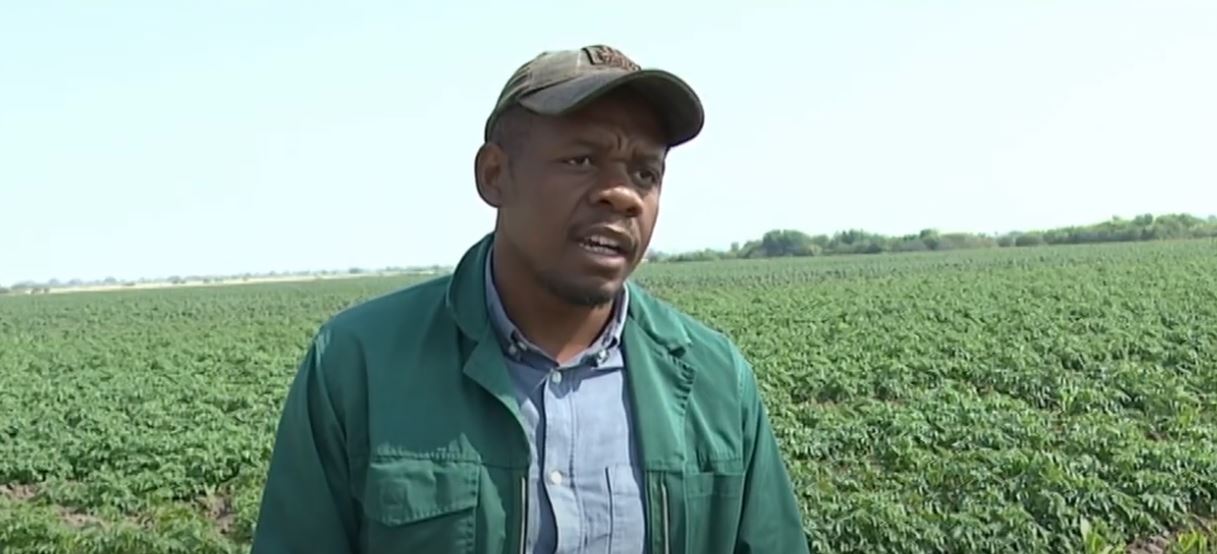
The Sikondo Green Scheme in the Kavango West Region is experimenting with a new potato variety called Valor. It's the first time the scheme is trying out a different potato, and the acting farm manager said they can't wait until the spuds reach maturity.
For the past 13 years, the Sikondo Green Scheme has only been planting the Mondial variety.
This potato, which originated in South Africa, is popular due to its high yield, early maturity, and exceptional drought tolerance.
But even the best spuds have shortfalls, explained acting farm manager Maxwell Nghidinua.
"Rotting under the soil due to high temperatures and high humidity. When the rainy season arrives, we often experience fungal diseases. Therefore, we were keen to explore introducing another variety that can thrive during the winter and cooler seasons and is typically harvested in June, July, and August, as we are currently doing. Additionally, we aim to have a variety that performs better under high temperatures and humidity, which are some of the extreme conditions we face."
Workers started planting the new variety in July on ten hectares of land, and harvesting is expected to take place in November, just in time for the festive season.
The acting farm manager stated that they have been cautiously planting a familiar variety for over a decade. They then decided to shake it up a bit by introducing the Valor variety.
Nghidinwa said if Valor performs very well, then they will increase the hectareage, which will allow them to stay in the market a little longer.
Valor potatoes are resistant to common potato diseases, making them a popular choice for farmers and home growers looking to reduce crop losses due to disease.
Apart from the Valor variety, the green scheme is also looking to experiment with other sources of food.
"We are exploring garlic and trying out various types of beans. As Namibians, we don't consume many beans, but they are quite healthy due to their high protein content. We are also considering some local indigenous crops, such as Bambara nuts in Kwangali, which are called 'nongomene' because they are beneficial for crop rotation. Additionally, we are exploring the possibility of growing cherry tomatoes for our net shades, targeting niche markets like restaurants and lodges. Furthermore, we might resume cucumber production, which has not occurred in the last two years."
Nghidinwa called on small-scale farmers to knock at the green schemes' door for any kind of information, mentorship or advice.