


Information exchange among SADC countries is key in combating illegal, unreported, and unregulated fishing.
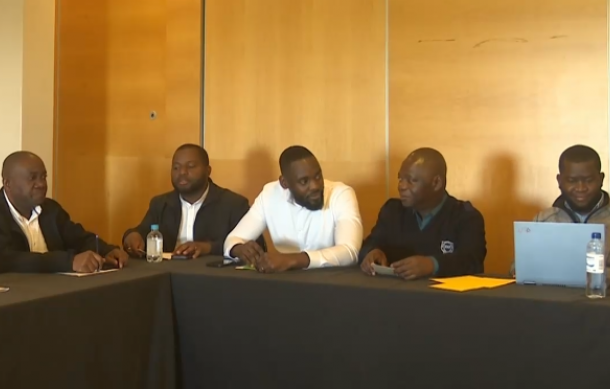
A workshop at Walvis Bay brought together Namibia, Angola, and South Africa to improve interagency collaboration and risk assessment of fishing vessels.
Law enforcement officials and vessel monitoring system operators from Namibia, Angola, and South Africa attended the workshop at the harbour town.
Stop Illegal Fishing is conducting its fourth training in Namibia to empower the officials.
Dr. Stanley Ndara is the Chairperson of the SADC Monitoring, Control and Surveillance Coordination Centre (MCSCC) technical committee. He said, "When law enforcement officials understand the risks that are associated with any vessel that intends to fish in Namibian waters, they can actually be very proactive in ensuring that these vessels do not come into our waters. If these vessels are suspected of carrying out illicit fishing activities. Not only illicit fishing activities, but also what we call fisheries crimes."
The Coordinator of Stop Illegal Fishing, Per-Erik Bergh, stressed that illegal fishing in the region has decreased over the years because officials are trained and they have access to new equipment.
He emphasised the need for the region to have a harmonised system.
"The use of satellite technology is a big success. And the interpretation and analysis of that information. Of course, the increased skill base of the fisheries officers is something that we're very, very focused on. Although there is a big difference between the countries. So it's important to make sure that we manage to put all countries up to a similar level. What we are trying to do is to create a harmonised system for the SADC region."
The SADC Monitoring, Control, and Surveillance Co-ordination Centre (MCSCC) is a platform created by member states to tackle illegal, unreported, and unregulated fishing.
Dr. Ndara said members are nearly done setting up the building in Mozambique, and the Executive Director will soon be appointed to handle the day-to-day operations of the institution.
"Hopefully, we will have an appointment during the first quarter of 2026 so that we can coordinate the functions of providing information to Member States in our fight against illegal, unreported, and unregulated fishing."
Through the institution, several fisheries-related illegalities were uncovered in SADC.