


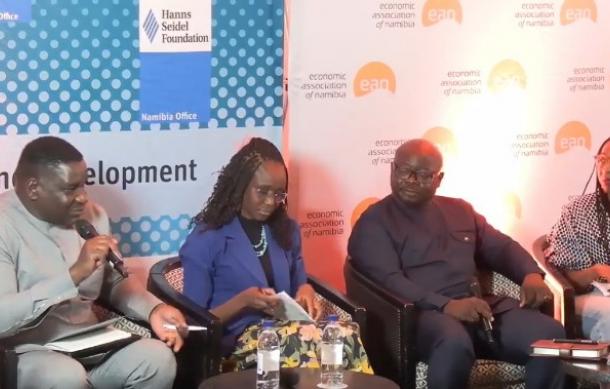
A public discussion by the Economic Association of Namibia (EAN) highlighted the structural causes of joblessness and emphasised the need to better align the country's economic growth with job creation.
The dialogue also explored actionable policy options to boost employment and strengthen collaboration among government, the private sector, and academia.
Despite periods of economic expansion, high unemployment, especially among the youth, remains a major concern, revealing a pattern of jobless growth.
The dialogue examined the causes of this disconnect, the performance of key sectors in generating employment and the stagnation of traditionally labour-intensive industries such as agriculture.
It also explored policy strategies for more inclusive and sustainable development.
The Ministry of Finance's Executive Director, Michael Humavindu, noted the progress the government has made toward improving economic and employment outcomes.
"The government has put in place a clear strategic framework through the SWAPO Manifesto Implementation Plan and the National Development Plan 6. As a government, we are prioritising institutional and infrastructure development, strengthening and collectively committing to the implementation of appropriate policies and strategies, and legal and regulatory instruments. The above should be anchored on better coordination, accountability mechanisms, targeting of investment, and integration across ministries and agencies."
The discussion also addressed the issue of skills mismatches, pointing out that there must be better alignment between education and labour market needs.
Senior Employment Specialist at the ILO, Jealous Chirove, discussed jobless growth and strategies for unlocking inclusive prosperity in Namibia.
He highlighted the country's Second National Employment Policy, which was developed through broad consultations and aligned with NDP4 to promote full, productive, and freely chosen employment aimed at reducing poverty and inequality.