


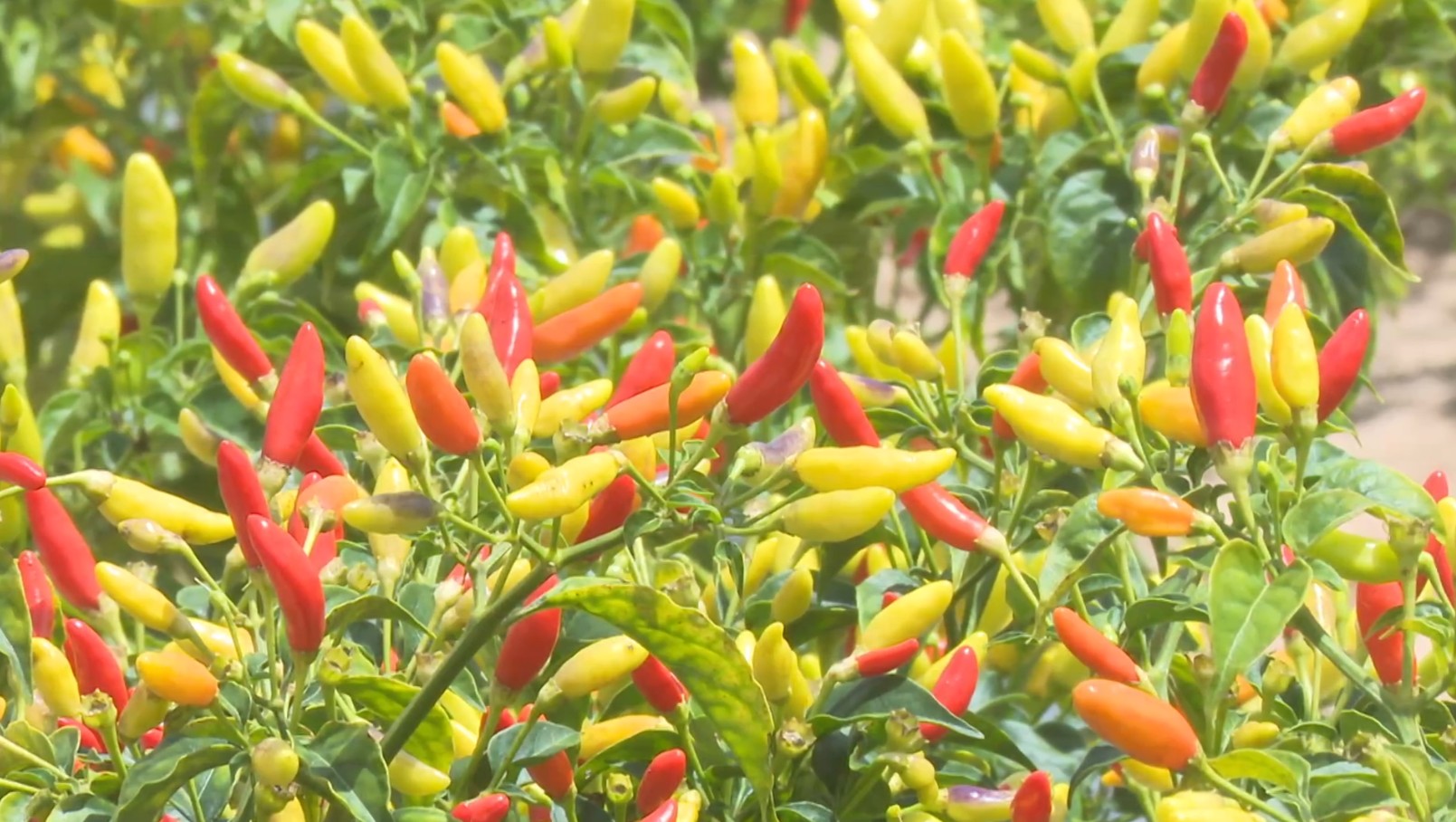
Lima Farm in the Kongola Constituency of the Zambezi Region, in collaboration with the World Wildlife Fund (WWF), has embarked on chilli production aimed at promoting sustainable integrated agriculture and mitigating human-wildlife conflict.
The WWF's Agribusiness Development Coordinator, Laudika Muyunda, said the chilli production will ensure that communities' livelihoods are catered for.
"We cannot take care of the animals without also taking care of the people. That is why they came up with the initiative called 'conservation leveraging agribusiness', so we want to conserve the natural resources, the wildlife and the species, and at the same time take care of the people, making sure that their livelihoods are improved."
Erastus Ndungu, the owner of Lima Farm, noted that while farming presents various challenges, chilli production requires minimal maintenance.
"So once you plant your chilli and take care of it for the first three months, it becomes mature and starts producing. Thereafter, it requires very little effort and attention. And the other thing that we realised is that you can keep it without uprooting it; it can continue producing chilli for another three years."
Fumu Joseph Tembwe Mayuni encouraged farmers to see chilli production as a way to eradicate poverty.
"The chilli that we are talking about today is not only eaten a lot by the Chinese; it is a medicine for our bodies. It is something that can produce an income for those who decide to farm it. For those who are unemployed, the chilli, if farmed well, can end poverty."
Kongola Councillor Bennetty Busihu said the regional council has availed land for WWF to establish an agricultural hub.
"And in the last two weeks, I have submitted a motion to the regional council. We have asked for a piece of land where they can do their programmes and also accommodation facilities for their staff, of which the council has agreed to that motion, and then we want to encourage that WWF, the land is available; please make sure that you look for investments to come and invest in Kongola."
Some farmers expressed concern that, despite the intensive labour that goes into chilli production, the return on investment is often minimal.
Farm owners, however, said they will nonetheless avail themselves to learn the business aspects of farming chilli.