


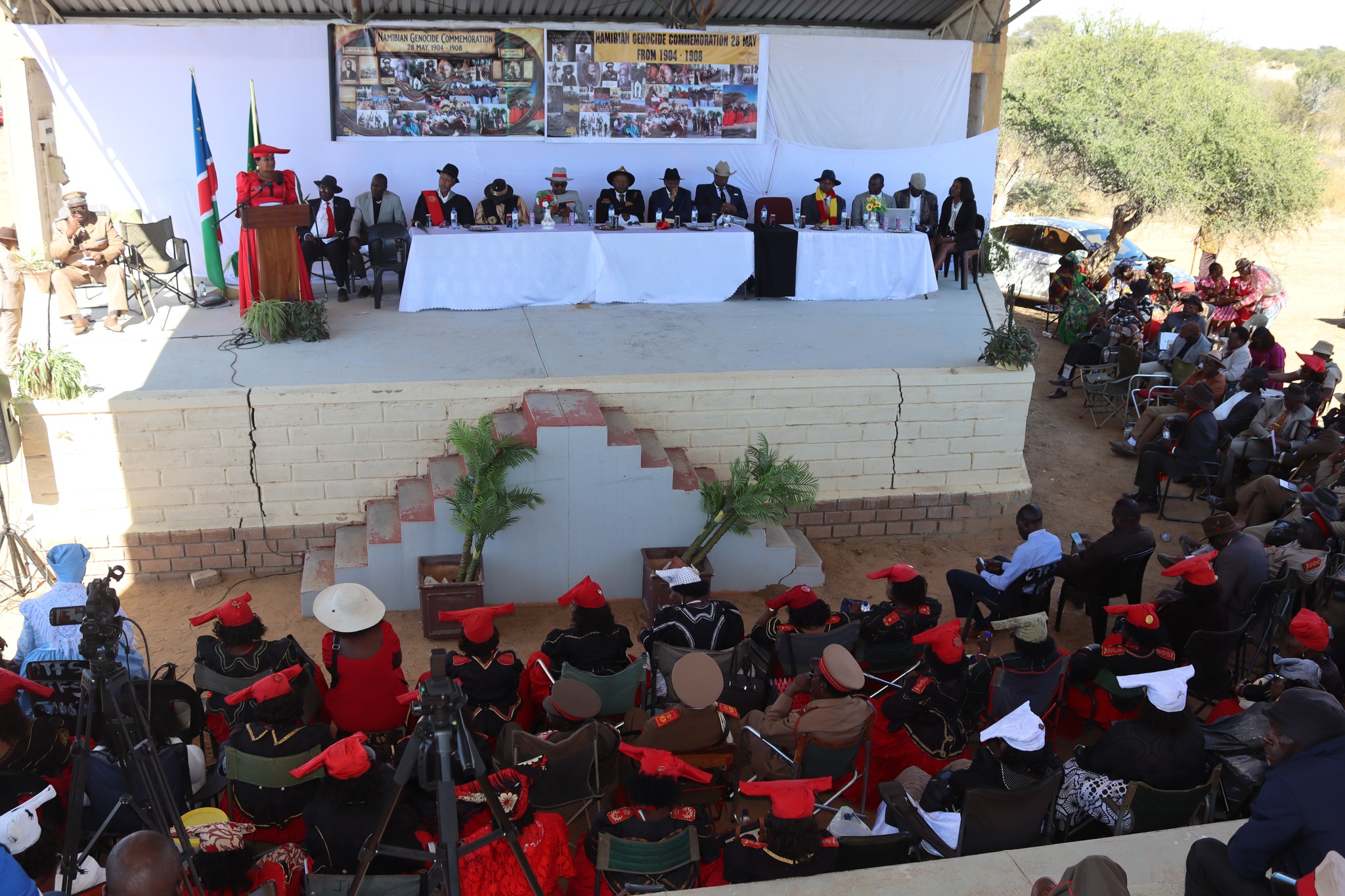
Activists and descendants of 1904-1908 genocide victims raised concerns over the absence of, particularly, genocide in the education curriculum.
They raised these concerns during a panel discussion ahead of the official commemoration this week.
Founder of Hitambo Virtual Academy, Mbunga Mbueza, says many Namibians still lack sufficient knowledge about the genocide because it is not formally taught in schools.
'"The biggest problem that we have in our community is that in our education system, genocide is not taught," he emphasised.
Mbueza explained that he only began researching the Ovaherero and Nama genocide during parliamentary debates led by politician Arnold Tjihuiko and the late Ombara Otjitambi Kuaima Riruako in the early 2000s.
"I was very surprised when I started with my first research on the genocide topic because it was during the heated time when Honourable Arnold Tjihuiko and the late Chief Paramount, Chief Kuaima Riruako, were introducing it in Parliament that I started reading about the Herero and Nama genocide. Now, remember that we also do not have a curriculum that talks about genocide. We want to prepare that genocide curriculum, and we want to create a curriculum that is very accurate and very educative also and not misleading. I should not actually insert myself in that history, a history that did not exist. And on the other hand, we also need to be very honest with ourselves. I know for a fact that when you lie too many times about a topic, you yourself start believing in that lie."
The annual Genocide Remembrance Day continues to serve as a platform for reflection, education, and healing, while calls grow for genocide history to become a permanent part of Namibia's education system.