


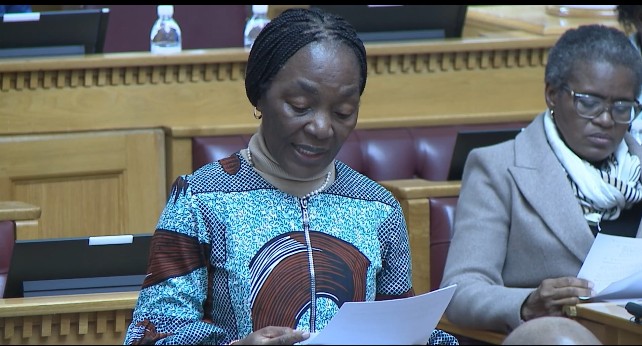
The Minister of Finance, Erica Shafudah, has tabled the Income Tax Amendment Bill to establish the Tax Court to adjudicate income tax and value-added tax appeals.
The draft legislation will also provide clarification on the role of the finance minister and that of the Namibia Revenue Agency's commissioner regarding the administration of the Income Tax Act.
The bill also provides for the procedures and rules that will govern tax hearings.
The tax court will form part of the High Court system and will operate independently, ensuring fair and impartial decisions free from outside influence.
“The High Court of Namibia declared in 2021 that the provisions in the Income Tax pertaining to the constitution of the special tax court and the appointment of a device to that court were unconstitutional. The effect of the order made by the High Court meant that the special tax court ceased to exist as an institution under the law. Taxpayers were therefore left without a specialised legal forum to which they could run and have their matters heard. Therefore, this bill seeks to amend the Income Tax Act so as to constitute the tax court for hearing income tax and value-added tax appeals.”
The bill transfers administrative responsibilities under the Income Tax Act from the Minister to the Commissioner of NamRA, reflecting that tax administration and collection have been carried out by NamRA since its establishment in 2017.
“This amendment, therefore, seeks to reallocate the administrative functions to the commissioner of the Namibia Revenue Agency. Clause 1b of the bill substitutes the free special court wherever it appears in the act for the word "tax court". Clause 2 of the bill amends the act by inserting the definition of tax court. Clause 3 amends it by substituting Section 73. Section 73(1) is amended, and it confirms that the rules of the high court will govern the appeal process to the tax court. Clause 73(1)a establishes the tax court and determines the methods on which the tax court may adjudicate. Section 73(2) is deleted and substituted with sub-clause 2(a). In terms of this court, the court has a discretion to appoint assessors and determine the place where the court may sit and grant powers to terminate the appointment of any assessor.”