


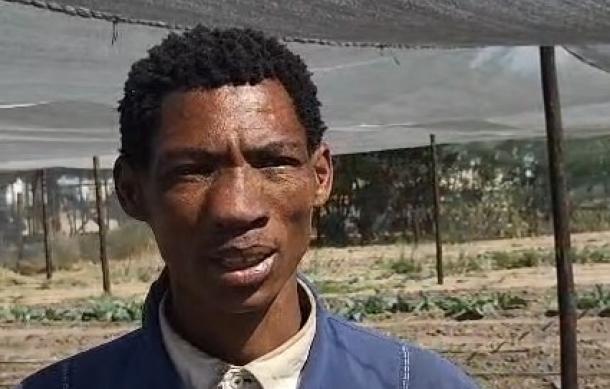
A group of four young people in Tsumkwe is proving that determination and teamwork can create opportunities.
The group is managing a community garden and poultry initiative, overcoming challenges such as water shortages and diseases affecting the chickens.
The project produces vegetables in a greenhouse and eggs from more than 100 chickens, supplying local residents and customers from as far as Gam, about 100 kilometres away.
Speaking to NBC News, Sao Eland explained how the group shares responsibilities through a monthly rotation system.
Although he was the only one on duty when NBC News visited the project on Tuesday, he said the arrangement allows each member to take turns working while the others have time off.
"We are four, and we work in shifts. As for me, I am now working with another colleague of mine who is not here. There is a male and a female who will be coming in; every month-end we will have to change and allow others to come in, and we will be off for a whole month."
The greenhouse produces onions, cabbage, carrots and spinach, while the poultry section focuses on egg production.
Eland, who supports two children, encouraged other young people in Tsumkwe to start similar initiatives, saying self-employment can provide an income when jobs are difficult to find.
"I want to tell the youth that success is not limited to projects like this; as individuals, we must stand on our own feet and take action to ensure our survival. As we grow up, we look for employment, but if there is none, we must do things for ourselves and our families."
The group sells its vegetables to community members and says demand for eggs remains high. Eland said most of the project's income comes from egg sales, with customers placing orders from both Tsumkwe and neighbouring communities.
He said the project's greatest challenge is an unreliable water supply, which limits vegetable production and prevents the team from meeting demand across the settlement.
Poultry diseases have also reduced egg production, even though the project has more than 100 chickens.
Despite these challenges, the four young entrepreneurs continue to grow their business while encouraging other young people to create opportunities through community-based projects.