


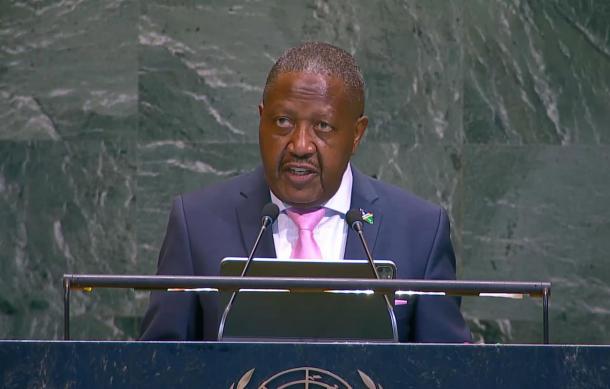
Namibia has urged immediate, concrete steps to reform global governance and strengthen multilateral cooperation as member states gather to take stock of the Pact for the Future, saying the commitments in the Pact must be translated into national, regional and international action ahead of the 2028 review.
Addressing the informal meeting of the United Nations General Assembly (UNGA) in New York, Namibia's Permanent Representative to the United Nations, Penda Naanda, said the Pact represents a collective commitment by member states to address global challenges that no country can solve on its own.
Ambassador Naanda said the Pact envisions a world that is safe, peaceful, just, equal, inclusive, sustainable and prosperous, where the well-being, security, and dignity of all people and the health of the planet are protected.
Naanda described the high-level meeting as an opportunity to reflect on the more than 56 commitments adopted nearly two years ago at the Summit of the Future, aimed at strengthening cooperation at international, regional and national levels.
"Through the Pact, Member States resolved, once again, that these challenges can only be addressed collectively, through strong and sustained international cooperation guided by trust and solidarity for the benefit of all and harnessing the power of those who can contribute from all sectors and generations."
The ambassador also pointed out the importance of engaging the private sector and international financial institutions in implementing both the Pact for the Future and the Sustainable Development Goals (SDGs), noting that the Pact is intended to accelerate progress towards achieving them.
"I had an engagement with the private sector, some of whom are accredited with ECOSOC, on their involvement in implementing the Pact for the Future and the SDGs, as the former is meant to turbocharge the latter. The private sector may have their own priorities, but certainly, there is room for continued engagement with them and all relevant institutions, including international financial institutions, to enhance sustainable development efforts."
The ministerial roundtable focused on Sustainable Development Goal 17, which promotes partnerships for sustainable development and examined reforms to global governance, including the UN Security Council, the international financial architecture and broader efforts to make multilateral institutions more representative, effective and responsive to the needs of developing countries.