


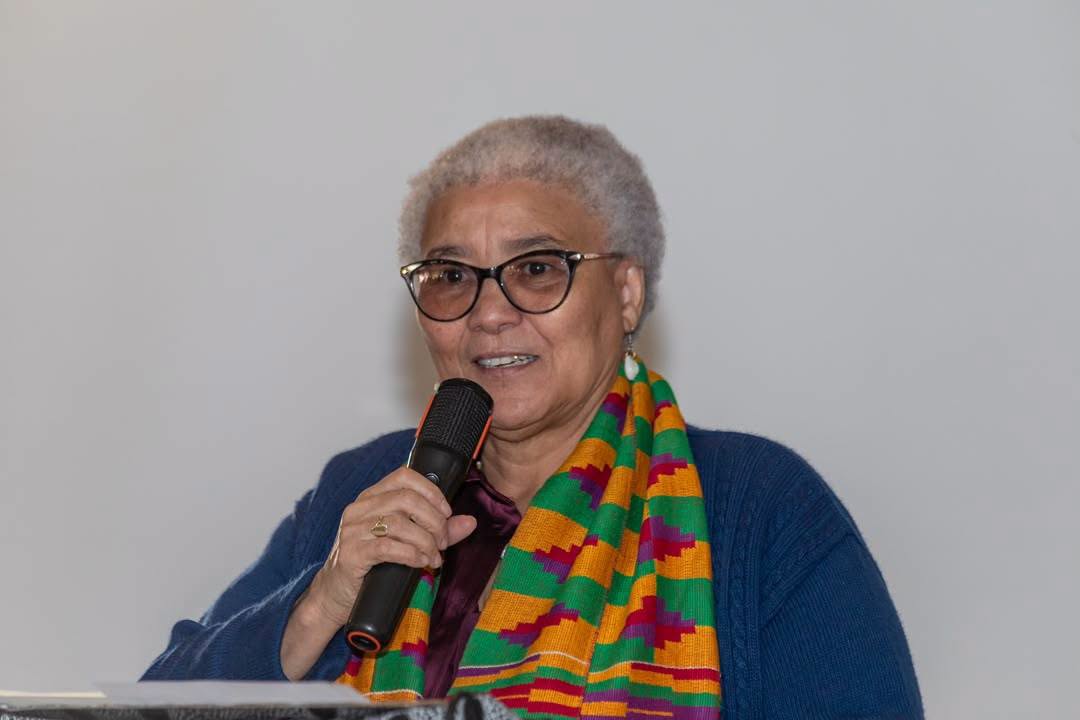
Vice President Lucia Witbooi has emphasised that the government remains committed to addressing challenges facing marginalised communities through collaborative planning, evidence-based decision-making, and sustainable interventions that will restore affected persons' dignities.
Witbooi said this at a high-level stakeholders meeting at Outjo, where ministers, governors and the Hai-//om Traditional Authority are engaging with the aim to strengthen the livelihoods for the Hai-//om communities in and around Etosha National Park.
The high-level meeting follows a one-day working visit by Witbooi to resettlement farms housing Hai-/ /om San communities at the Kunene, Oshikoto and Oshana regions.
The vice president explained.
“The evidence we witnessed and the data we collected reaffirmed the need for a coordinated, practical and sustainable government. Our government remains steadfast in its commitment to ensuring that no Namibian is left behind. This commitment is firmly anchored in the Sixth National Development Plan (NDP6), particularly under the Human Development and Community Resilience priority area, which seeks to improve the well-being and socio-economic conditions of all citizens, including the marginalised communities.”
Witbooi called for the meeting to not be a mere consultation but to reflect the government's commitment and resolve.
"Let us focus our collective efforts on developing practical, coordinated, and sustainable solutions that respond to the realities on the ground. Our recommendations should be realistic, implementable, and capable of informing the comprehensive plan that will ultimately be submitted to the Cabinet Committee on Land and Social Issues and thereafter to Cabinet for consideration."
Oshana Governor, Hofni Iipinge, is hopeful that the recommendations speak to the heritage and a positive future of the San communities.
"Today's engagement must not become another platform where grievances are heard, noted and then returned to the institutions from which they came. Its immediate purpose is to receive the technical assessment findings, interrogate them against the lived experiences of the affected communities and the mandates of responsible institutions, consider the recommendations arising from the assessment, and, where there is sufficient agreement, adopt those recommendations as the basis for coordinated government action.”
Concerns raised by the marginalised communities include restricted movement and access to natural resources, limited access to electricity, transport, and other essential services, and unequal access to employment and economic opportunities, as well as uncertainty regarding land and resettlement.