


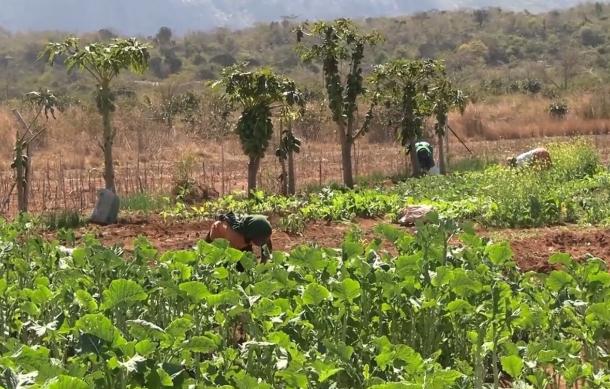
Farmers in eastern Zimbabwe are using solar-powered irrigation to keep crops growing through dry periods, turning a community garden into a source of food and income.
Footage filmed at Mutekwatekwa Community Garden in Chitiyo village shows farmers tending plots, planting and watering crops. Women are seen collecting water from a solar-powered system, while panels installed beside the fields power a borehole serving the garden.
Farmer Beauty Manomano said that the produce from the plots is consumed by the families working in the garden, while extra produce is sold in the nearby city. She said income generated from the garden has helped them pay school fees, improve their diets and invest in livestock.
"The change that has been brought by this garden is that some are now able to send their children to school, while others are now able to feed their families. We are now able to provide our families with a four-star diet that we were taught by our sponsors. We now have healthy children, and even the rate of kwashiorkor has reduced."
The project has also provided an additional source of income for women. Farmer Lydia Mushanjirwa said some had bought livestock and were using a community savings club to manage their earnings.
"This has made most women self-dependent and less reliant on their husbands for everything, including relish."
Farmers also say they are keeping production costs low by using organic manure from cattle and goats instead of chemical fertilisers.
The garden was established in 2023 by the local community with support from USAID through the Takunda programme, a five-year food security and resilience initiative led by CARE in Zimbabwe's Manicaland and Masvingo provinces.
For the 50 farmers still working at Mutekwatekwa, the combination of groundwater and solar energy means crops can continue growing when rainfall alone is not enough.
Agriculture is the backbone of Zimbabwe's economy, employing over 80 per cent of the rural population and contributing roughly 17% to the national GDP.
As drought and unreliable rainfall continue to threaten smallholder agriculture in Zimbabwe, the Mutekwatekwa garden is providing a community-level example of how solar-powered irrigation can support food production, household incomes and resilience.