


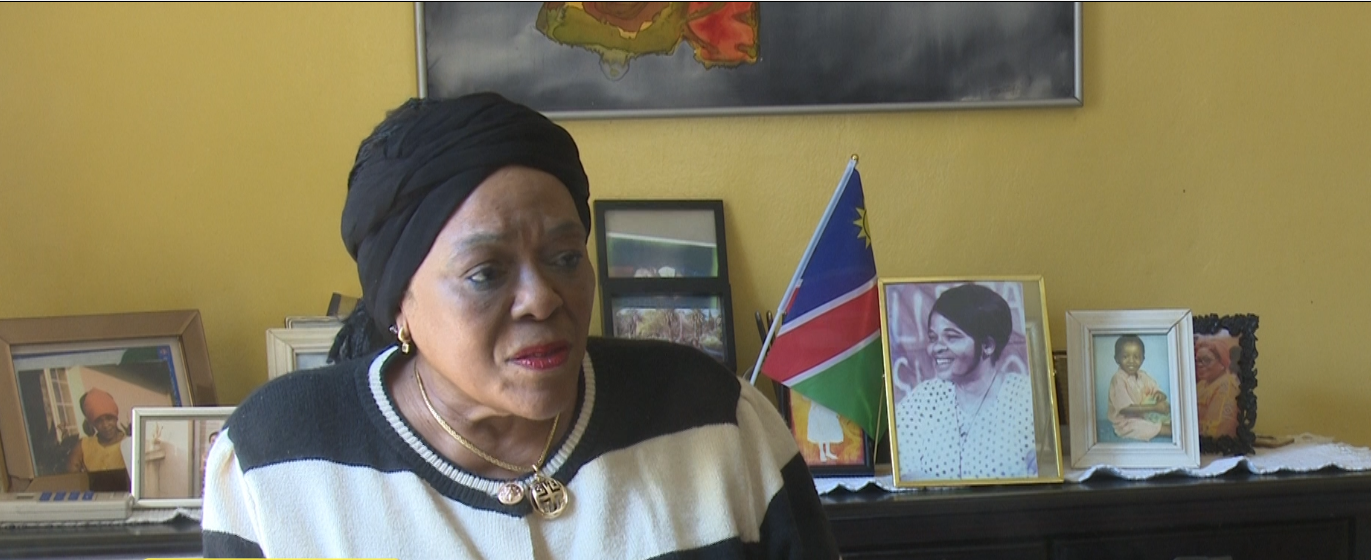
What is the true cost of patriotism when your mother belongs to an entire nation? Media personality Norah Appolus takes us into the life of her mother, Putuse Appolus-popularly known as Meekulu Putuse.
As one of the first women to cross into exile during the liberation struggle, Meekulu Putuse served as a SWAPO Central Committee member and a foundational leader of the Pan-African Women's Organisation.
She never lived to see an independent Namibia, passing away in Zambia in 1986 following a stroke.
On the pages of Namibian history, she was Meekulu Putuse – a selfless freedom fighter, a nurse from the historic Old Location who defied colonial orders, and a foundational pillar of the liberation struggle.
Norah Nolele Appolus recalls growing up in a household that doubled as a sanctuary for freedom fighters.
"There were older people in the house. It was always full. So we took it as normal. I mean, ever since we were kids, we always had uncles and aunts in the house. So to us, it was normal. We really didn't realise that. It was only after we came home, after independence, when she was accorded a hero status that we realised that, oh, okay, yeah, she was a hero."
She described her mother, who was a passionate baker, as loving, caring, and strict too, adding that she tried to instil African values.
"Well, I remember one day we were in Algeria, living in Algeria, and we didn't have water. So we had to go to a distance to get water. And when she took a bucket, and when she came back, she put this bucket on her head. And she was carrying this bucket on her head and another one in her hands. And I mean, I was totally shocked. And I looked at her and said, 'Mum, you can put a bucket on your head?' And she said, 'Yeah, I grew up in the village, you know, normal.'"
Appolus emphasised that growing up under the wings of a freedom fighter profoundly shaped her and her two brothers' Jomo and Mburumba Appolus characters.
"The one overriding factor that I know for sure did shape me was the fact that they instilled in us that to be in exile and to have had those opportunities was a privilege. But that we should always come back home. The goal was to come back to Namibia. I mean, I could have remained in Europe where I was working. I had a job, et cetera."
Asked if Namibia was doing enough to document and celebrate its liberation heroines, this is what Apollus had to say.
IN: "As the daughter of Putuse Appolus, I will only say, no, it's not doing enough. It's not doing enough because the sacrifices that women like my mother and other heroes went through should be sacred. It should be sacrosanct, and it should be taught in schools. It should be now a curriculum. It should be applauded. It should be lauded. It should be held high because at the end of the day, what we want to see is that never again. And we need to instill this history because the people who don't know where they come from will not know where they are going to. And this is what anchors us. This is what should anchor the Namibian nation. That we should realise that this independence didn't come freely. OUT
Appolus has called for a shift in Namibia's traditional definition of heroism, arguing that national honours should extend beyond those who fought in the political and armed liberation struggle.
She suggested that broadening the spectrum would allow younger generations to take greater ownership of national celebrations and identify more closely with modern national figures.
Appolus, a veteran journalist, presenter and media trainer, cites renowned eye specialist Dr. Helena Ndume as a prime example of a contemporary hero.
She praised Dr. Ndume for her selfless, unpaid work in restoring sight to thousands of cataract-blind patients.
By recognising these modern contributions, Appolus believes the country can foster a more inclusive and meaningful connection to patriotism today.