


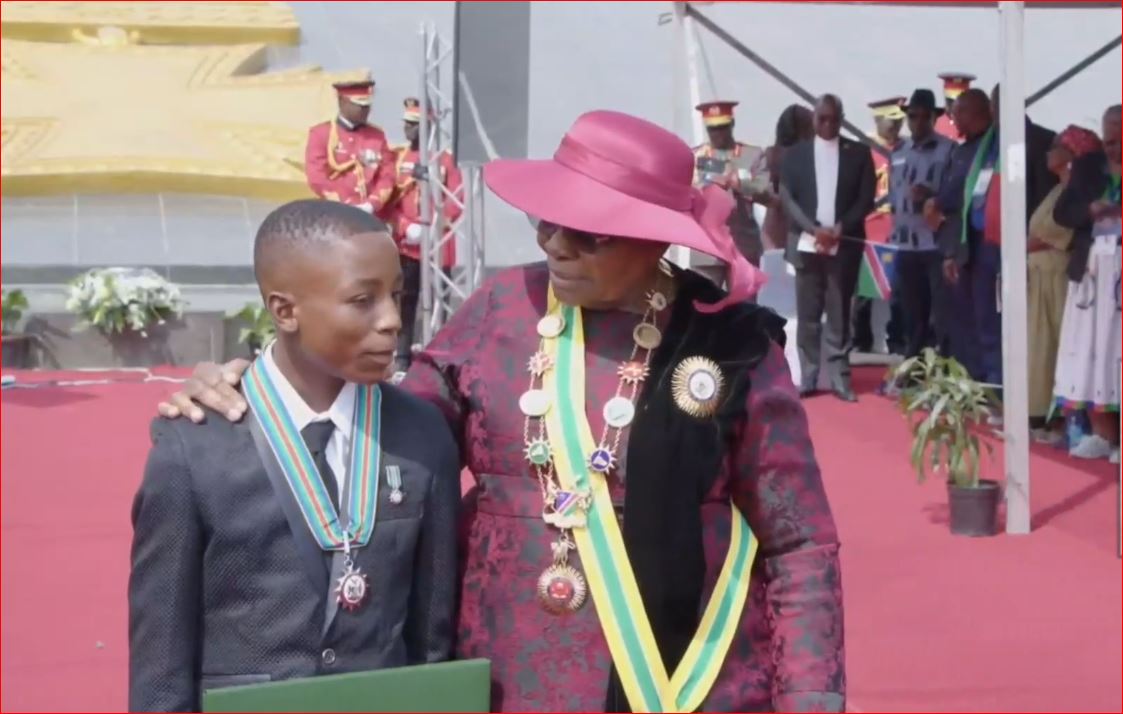
The government says Namibia's national honours system is meant to recognise service and exceptional achievement, not privilege, political connections or favouritism.
Minister of Defence and Veterans Affairs Frans Kapofi provided the clarification as the country commemorated Heroes' Day on August 26.
But a political analyst says the country may need to rethink what it means to be a hero given the evolving realities.
The National Honours System provides for formal orders, decorations and medals to recognise distinguished service to the country.
This year, more than one thousand Namibians received Liberation and Independence Medals, joining thousands recognised for their contribution to freedom and development.
Minister Kapofi says the selection process begins at the community level, where regional governors are expected to identify people who meet the required criteria.
"They're supposed to really look at people who have excelled, who have distinguished themselves from among others, and who have done something to deserve recognition by the head of state. It is not a preserve of some. But you see, when you are requested to look into your community and to produce those that deserve to be recognised, you should not play Mickey Mouse."
Kapofi defends the system as designed to be inclusive, with veterans qualifying once their participation in the liberation struggle is verified.
But he also raised concerns over the time given to regional authorities to identify deserving candidates.
'It is better not to do anything than to do just as I was requested. It's better not to do anything if you are not sure about what you are about to do. It's an honourable way to say, unfortunately, this time, we did not find someone because the time we had was not enough. Instead of you just sending names, say, Ah, there's Kapofi here, there's the agenda, and we might just give. No. It needed time."
Apart from the Heroes status and liberation medals, the honours system includes distinctions such as the Most Brilliant Order of the Sun for meritorious service, the Most Excellent Order of the Eagle for diplomatic service, the Order of the Mukorob for meritorious military service and the Most Distinguished Order of Namibia.
Political Analyst Rui Tyitende, however, contends that recognition must also speak to the changing realities of the country.
He says this is because younger Namibians face challenges that differ sharply from those of the liberation generation.
"The struggle for Namibia's political and economic independence did not end on the 21st of March 1990. It has evolved. It has moved from law to systems. It has moved from segregation to inequality. We now need to reclassify and actually reconceptualise what it means to be a hero. The criteria. Who gets to be a hero? Is it because you put Namibia on the worldwide net? Is it on account that you have been able to improve the living conditions of the Namibian people?"
The debate now places the honours system between two considerations: preserving recognition for those who shaped liberation while ensuring that national service and achievement remain relevant to future generations.