


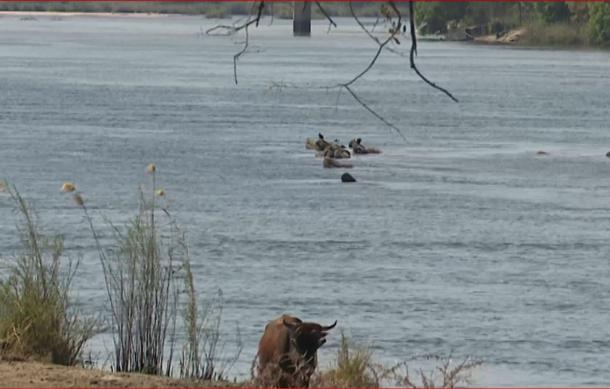
Victims of human-wildlife conflict at Mukwe in the Kavango East Region are frustrated with how long it takes the Ministry of Environment to process their offset payments.
A number of them have now resorted to camping outside the Mahango Game Park office until their voices are heard.
19-year-old Josephine Ndumba is looking after the family since her mother was attacked by a crocodile in April 2025.
The attack left her mother in constant pain and unable to work. She is now permanently disabled.
The N$15.000 She received could not cater for a lifelong injury. Ndumba is now left to look after her five siblings and their mother.
79-year-old Yatwimana Kutenda lost his 13-year-old son after a crocodile attack almost two decades ago.
Kutenda says his family only received N$5.000. His son's death certificate says the cause of death was drowning in the river.
46-year-old subsistence farmer Kayana Ditavu looks after 18 people.
She says wild animals have been destroying her crop field for years, sometimes even killing their livestock. Her household is unable to survive.
These are just a few of the human-wildlife conflict victims from Mukwe.
They are all calling for the Ministry of Environment, Forestry and Tourism to find effective ways of processing their offset payments.
They are also calling for lasting solutions to the human-wildlife conflict, saying the employees on the ground, responsible for compiling the incident report, are not taking them seriously.
"Is the ministry staff on the ground providing the people in Windhoek with the correct information after they collect it from us? Whenever we enquire about how far the process is, they refer us to Windhoek. Are the people in Windhoek the ones rejecting our claims even though there is clear evidence? We find it very surprising," said headman of Popa Village, Sebastian Muhembo.
The group is now camping outside the Mahango National Park office.
Aron Mundanya, a community activist, indicated, "Our people will be camping here at the Minister of Environment's office until these people are paid or until these people get correct answers on why they are not paid."
The activists allege that not all human wildlife conflict victims are being treated equally.
"I know in our community, Mukwe constituency, better families, this incident happened in their home, and those people are paid because there are teachers there, there are nurses there, there are police officers there or officials who are known, and those people were paid immediately, the full amount even. But when you look at these poor people, the way we are treating them is not fair."
The ministry's spokesperson, Vilho Hangula, told NBC News that they are aware of the matter and are working on it.
He says the Ministry regrets that some people who have fallen victim to human-wildlife conflict and who qualify for offset payments have not yet received them, if any.
He says it is, however, important to note that human-wildlife conflict cases are assessed on their individual merits, adding that it would therefore be difficult to provide a general response to a group of people whose cases happened under different circumstances.
Hangula also added that not all human-wildlife conflict cases qualify for offset payments.
The camping group informed NBC News that they were contacted by the ministry and were asked to provide certain details, including documents.
In the meantime, the group are determined to camp outside, saying they will be approaching the tourists who are entering and leaving the park for items like money and food while they are there.
The spokesperson is asking the group to approach the relevant offices to seek updates on their specific cases as well as an explanation on how the scheme actually works.