


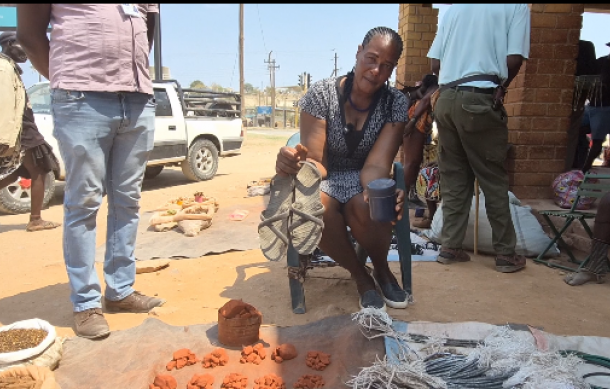
Ancient Himba beauty traditions thrive as women preserve the cultural cosmetics trade at Opuwo.
There, culture and tradition are deeply lived and respected, where a Himba woman is keeping centuries old beauty practices alive through a small but powerful business rooted in ancestral knowledge.
These items are not modern innovations but cultural practices passed down through generations of Himba women.
Makavarurapi Karuhama's trade includes otjize, the iconic red ochre applied to the skin for protection and beauty; otjizumba, a fragrant powder made from crushed roots and herbs; traditional beadwork known as omihanga; and handmade rubber sandals.
"We sell traditional products from our Himba tradition; we sell omihanga, otjizumba, and otjize. Those items preserve our tradition."
Karuhama says each product carries deep cultural meaning.
The red otjize represents identity, protection, and beauty, while the perfumed powder reflects a close relationship with nature, blending roots and herbs into a natural fragrance.
The beads, especially those resembling gold and silver, symbolise dignity and respect, with golden beads often regarded as a mark of honour for women.
"Like the red ochre "otjize" and fragrant powder "otjizumba" they are collected from the mountains, so we go collect from the mountains," she explained.
Her work requires travelling into the mountains to collect roots and natural materials used in preparing these cosmetics, ensuring that ancestral knowledge is not only remembered but also practised in daily life.
Despite the cultural and economic value of her trade, she faces challenges in finding a proper place to sell.
"The challenge that we face is the town council; they have not found a place for us, so sometimes the place where they take us is a place where customers don't come and buy. Sometimes it's far from the shops; the shops are close to where customers are, so customers don't come. That's why we try to storm at places in front of the shops so that we get some money, because once a customer comes from the shop, they bring a N$10 and come buy otjizumba or ovihanga, so we just don't have a proper place to sell from."
Her work reflects the spirit of Opuwo, where culture is not only preserved but actively lived through traditions that continue to shape identity, dignity, and everyday survival.