


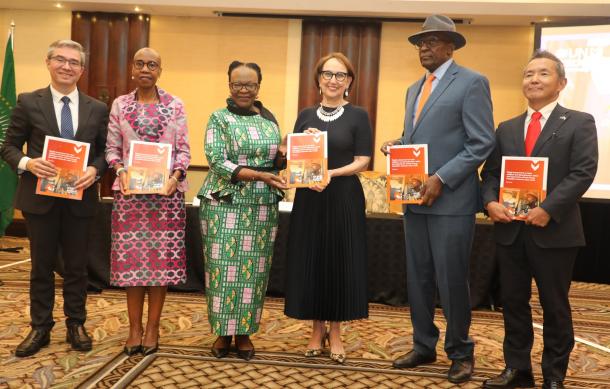
The recently launched Rapid Assessment Report on Value Addition and Diversification has identified an estimated N$ 811 million in worldwide market opportunities.
This is from 200 trade products identified across nine sectors under a global export scenario.
The report highlights an additional N$ 117 million in potential-through import substitution-from goods that can be produced locally.
Together, these opportunities, the report indicates, could generate approximately 26,000 jobs across the economy.
Launched by the National Planning Commission in partnership with the United Nations Conference on Trade and Development (UNCTAD), the report identified 353 products across twenty-three sectors where Namibia can realistically diversify.
Sixty of those identified products are directly linked to energy-transition-mineral value chains.
Secretary General of UNCTA Drebeca Grynspan explained.
"Namibia already has the Tsumeb smelter producing blister copper-the step toward fabrication builds on capabilities and facilities that exist today. The mines already buy these products; much of it is currently shipped in from abroad. Or take pharmaceuticals-sterile injectables, blood fractions, vitamins-products the analysis identifies as both commercially viable and socially urgent. A Namibian hospital stocking locally produced medical supplies: that is structural transformation you can hold in your hand."
The report further maps out specific bottlenecks and proposes targeted policies to close these.
Director General of the National Planning Commission, Dr. Kaire Mbuende, gave an insight into the report.
“The report provides evidence-based and practical pathways for moving beyond the export of raw commodities toward value addition, industrialisation, and economic diversification. It identifies concrete opportunities, highlights policy and institutional gaps, and offers actionable recommendations aligned with our national development priorities.”
The report assessment is funded by Japan in support of Namibia's efforts to identify actionable pathways for industrialisation and economic diversification beyond raw commodity exports.
Deputy Head of Mission at the Embassy of Japan in Namibia Noriaki Sadamoto had this to say.
“We hope that the findings and recommendations of this report will serve as a useful tool for policymakers in Namibia and contribute to constructive discussions at the national, regional, and international levels.”
The report has recommended sector-specific opportunities and policy recommendations to strengthen economic resilience, create jobs, and foster inclusive and sustainable growth.