


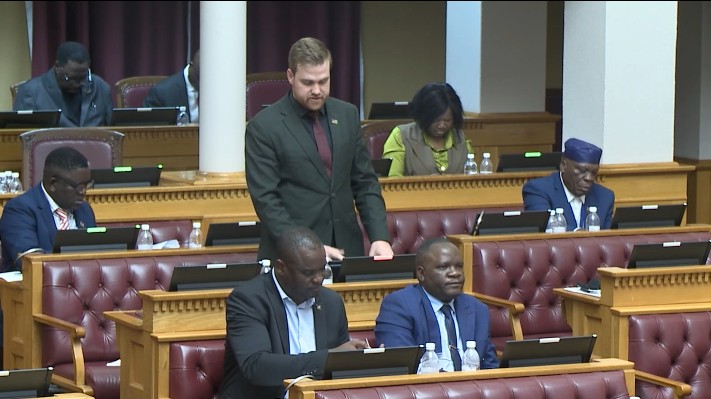
The National Assembly has approved a N$535 million budget for the Office of the Prime Minister (OPM) for the 2026/2027 financial year, though several MPs raised alarms over reduced funding for the Disaster Risk Management Programme.
Concerns centered around cuts to disaster coordination, from N$1.6 billion two years ago to just N$47 million this year, amid ongoing floods in Zambezi, drought relief needs, and fire risks from recent good rains.
Swapo MP Ephraim Nekongo urged action: "Now that we are talking about floods in Zambezi, I think it's high time that we do not only talk about the $5 million that is budgeted, but we must think about the payment as a solution."
Flood and drought responses drew sharp criticism.
IPC MP Michael Mulunga recalled unfulfilled promises: "I remember very, very well last year the right to know our Prime Minister assured this house that the project was going to be done by the end of December last year."
UDF leader Nico Somaeb called for tailored aid: "When there is drought in the southern part or central part, we are focusing on livestock. But if we plan for drought in the northern part, it's mostly on crop production."
Swapo MPs highlighted gaps in prevention and support. Martha Itope stressed, "It's a pressing need for improved fire prevention measures, faster and effective emergency response, safe house conditions, and supporting the affected family to rebuild their homes."
John Likando, who is also an affected Zambezi resident, noted, "I would like to remind the office that this situation occurs regularly. But I must say that floods have more advantages than drought."
Willem Amutunya tied it to food security: "Food security cannot be achieved when the production that we are making or we are doing is not given to the economy."
PDM MP Inna Hengari questioned post-disaster follow-up: "To what extent has the office gone into whether it is to sort of survey which communities still need assistance, even after the drought and even now when we are having flooding?"
NDP leader Lukato Lukato added, "Many Namibians... become victims as a result of fire, where they lost everything and need assistance."
Decentralisation emerged as a key demand. Swapo MP Marlyn Mbakera said, "The PM's office must really allocate substantial amounts to the regional councils, too, so that when disaster strikes, the response time is shorter."
Sirkka Ausiku noted weak structures: "Look at the structure of the regional disaster risk management committees. They are thin on the ground, and they need to take action when an emergency comes at the regional level. We have received good rains this year."
Marius Sheya cautioned about the impending fires, stating, "Given the recent good rains, we should expect field fires to ignite soon, and we lack the resources to combat them."
Other issues included programme specifics. IPC MP John-Louw Mouton queried Programme 5's N$128 million for digital upgrades: "Building a fully fledged data center is crucially important for our data sovereignty."
Armas Amukoto sought clarity on N$31.9 million in transfers: "Which entity is being subsidised by the Prime Minister's office?"
Poverty and readiness persisted as themes. IPC MP Lilian Lutuhezi said, "Over 40% of Namibians live in poverty... yet we have 400,000 allocated to food security."
APP leader Ambrosiuss Kumbwa pushed prevention: "We have to go for intervention rather than waiting for disaster."
IPC MP Rodrick Likando warned, "We must not only focus on natural disasters. There are also man-made disasters."
Prime Minister Dr. Elijah Ngurare responded positively: "I want to thank you once again, most sincerely, honourable members, for the support you are giving to us and through us to Her Excellency the President so that we can deliver to the aspirations, hopes and dreams of our people. And when we succeed, we succeed together, and that is the unity that we want. And be open at all times."