


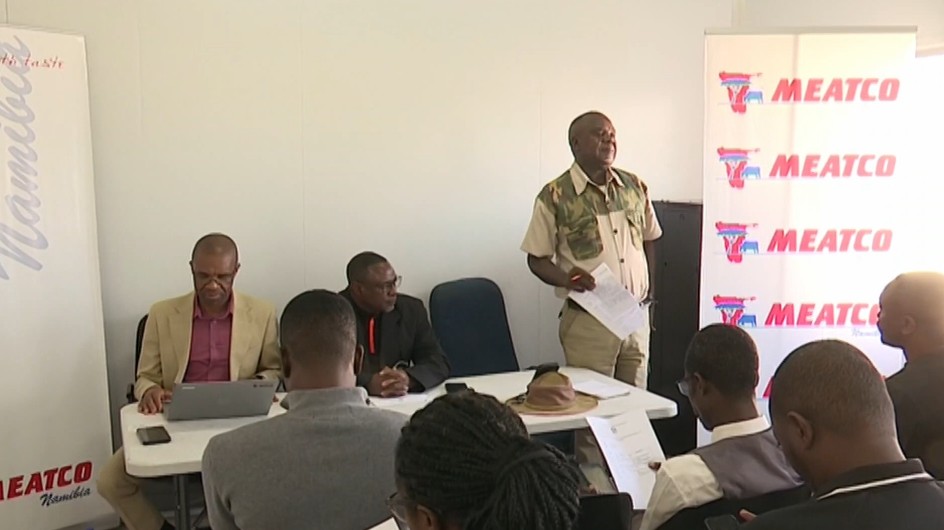
Farmers from the Kavango East Regional Farmers Union have high expectations for Meatco's new Northern Communal Areas (NCA) CEO.
Timotheus Kativa has been appointed Meatco's CEO for the new Northern Communal Areas.
The farmers met Kativa during an engagement at Rundu on Wednesday.
The Kavango East Regional Farmers' Union says Kativa's appointment is a victory for farmers in the Northern Communal Areas.
Even though they expressed their support for Kativa's new role, they outlined certain expectations that the CEO will have to meet.
The farmers urged him to work closely with the Ministry of Agriculture to ensure the implementation of the equalisation fund.
They also asked Kativa to collaborate with the directorate of veterinary services to implement the on-farm quarantining, which will eventually allow farmers to market their cattle more efficiently.
Thomas Nyambe is the chairperson of KERFU.
"We request that the 6X6 truck become operational to assist farmers in remote areas where road infrastructure remains a challenge. We also appeal for the reduction of payment turnaround time for farmers, because farmers depend on timely payments to meet their urgent financial needs. Furthermore, we encourage you to engage with relevant authorities to secure land for a feedlot at the Uvhungu-vungu green scheme to improve the quality and throughput of cattle at the Rundu abattoir."
The union also called upon the government to support farmers by addressing critical issues such as road infrastructure, water supply, access to quality breeding bulls and access to finance without collateral.
Kativa told the farmers that he has heard their concerns and requested support from all the stakeholders.
"I have listened to what the farmers want me to deliver. I can only deliver with support, and with this support, I will call upon you farmers so that we can work together to educate farmers to understand the value chain of the industry. The more farmers understand the value chain, the more we will all pull together so that if there is any delay in the chain, farmers understand why the delay."