


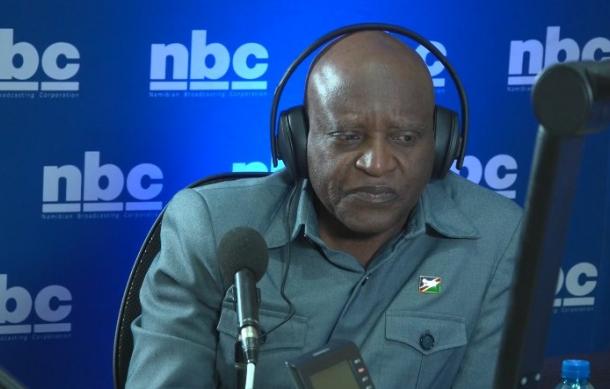
Prime Minister Elijah Ngurare participated in a robust public engagement over the remoteness allowance system for public servants.
Dr. Ngurare was on NBC National FM's People's Parliament following concerns regarding possible inconsistencies in how schools and rural institutions are classified and compensated.
From the onset, the prime minister pointed out the importance of accountability by highly placed office bearers.
He explained that the bush allowance is under review, and this has been understood by some sectors as the government entirely removing this allowance.
A caller questioned why some schools continue to receive the "bush allowance", despite improvements in infrastructure and access, while others that are equally remote or even more isolated do not appear to receive similar support.
"In terms of fairness, and I know that the caller perhaps cannot give us any specifics, but the intention really – and I remember the president also speaking to this – is that we would like many of our young professionals to go to remote areas. And it presupposes from our side that we will do all we can to make the remotest areas amenable for the young people to go there. In other words, if we send them to Gam or other places that are remote, it means that we must provide the amenities commensurate with them being there."
He said the system categorises areas into four groups based on levels of remoteness and access to essential services.
"Category A, considered the most remote, attracts an allowance of N$1,750. Category B, classified as remote, receives N$1,150. Category C, regarded as the least remote, receives N$750, while Category D areas, which are not considered remote, do not qualify for the allowance. The classification is informed by a range of factors, including availability of accommodation for staff, health and education facilities, electricity, water, road infrastructure, transport, shops, social amenities, mobile communication, and distance from major centres."
Dr. Ngurare said the ongoing review is intended to address disparities that may have developed over time, particularly where some areas have experienced improvements while others remain underserved.
He said the review process seeks to correct such anomalies and ensure fairness and consistency.
At the same time, the premier cautioned against interpretations that the allowance is being removed, stressing that the intention is to refine and strengthen the system rather than discontinue it.
Dr. Ngurare cited ongoing government initiatives, including the expansion of Technical and Vocational Education and Training (TVET) centres and the construction of staff housing and sanitation facilities in rural schools, as part of efforts to improve service delivery in remote communities.