


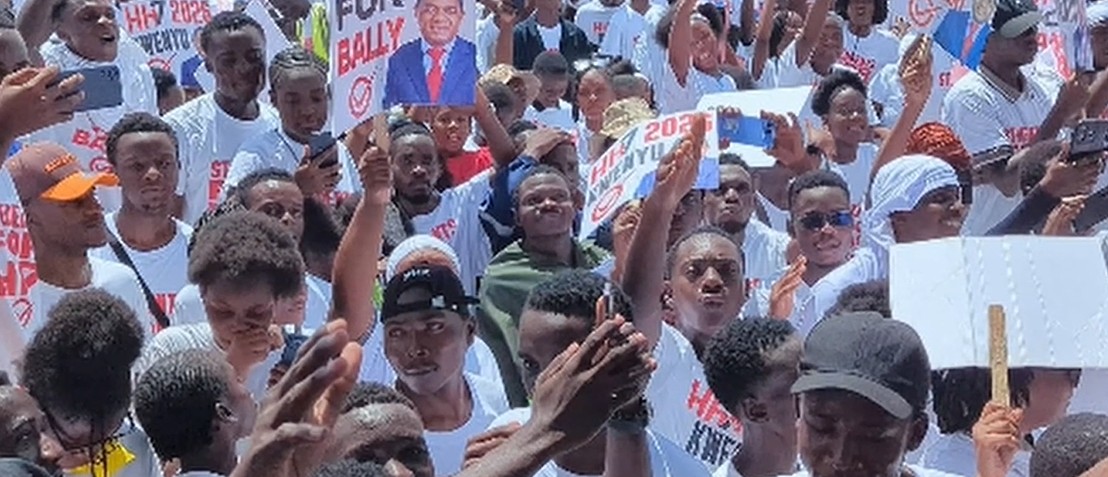
Political players have intensified campaigns in readiness for the August 13 general elections to elect a president, members of Parliament, mayors and council chairpersons and local government councillors.
With only less than two months to go, the political environment is peaceful despite many political players taking part in the election.
Zambia has held eight general elections since its independence in 1964.
From the first general election held in 1968, there were no general elections held in that country until 1991, when the country reintroduced multi-party democratic elections again.
During this period between 1973 and 1981, the founding president Kenneth Kaunda's government had declared a one-party state.
This was mainly to avoid external forces from divisions that could have disturbed his quest to help liberate other neighbouring countries such as Namibia, Zimbabwe, South Africa and Mozambique from attaining their independence.
Kaunda believed that there was going to be no meaningful development in his landlocked country if the neighbouring countries were not liberated.
From 1991 onwards, general elections have been held every five years, ushering three different political parties into government.
Fredrick Chiluba's, Levy Mwanawasa's and Rupiah Banda's Movement for Multi-Party ousted Kaunda's UNIP in 1991 and ruled up to 2001.
Michael Sata's and Edgar Lungu's Patriotic Front then took over in 2011 until ten years later, in 2021, when they were equally replaced by the incumbent President Hakainde Hichilema of the United Party for National Development.
This August, the country is going for another general election where Hichilema faces more than a dozen opponents in the race to State House.
The ruling party is mainly credited with effectively managing the debilitating drought of the 2023/24 drought and restructuring and suffocating the debt burden they recently inherited in 2021.